Hardtail vs full suspension: setup differences
A hardtail has one suspension unit to set up, the fork; a full-suspension bike adds a rear shock whose movement reaches the wheel through the frame's leverage ratio, so the two ends must also be balanced. Sag sits between 15% and 30% at each end, depending on the discipline; a hardtail sets it at the fork only.
Published
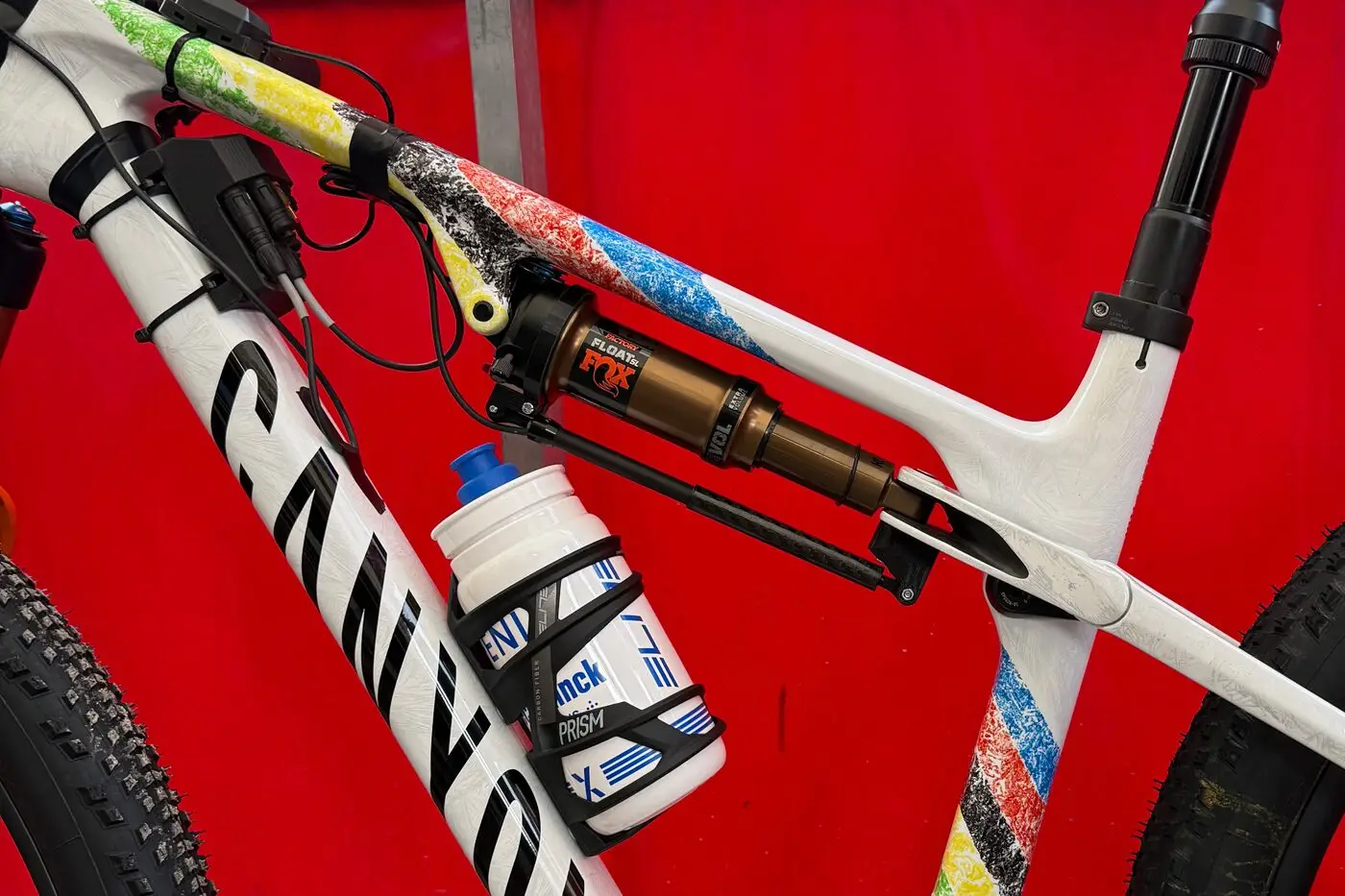
What changes between a hardtail and a full-suspension bike
| Compared on | Hardtail | Full suspension |
|---|---|---|
| Suspension to set up | Fork | Fork and rear shock |
| Sag to set, by discipline | Fork, 15–30% | Fork and shock, 15–30% each |
| Rear wheel movement | None from suspension | Shock stroke multiplied by the leverage ratio |
| Balance to check | None | Front against rear |
| Sensors to record it | 1, on the fork | 2, on the fork and the shock |
Setting up a hardtail fork
A hardtail fork is set up exactly like any other: sag first, then rebound, then compression, one change at a time. How to set up mountain bike suspension covers the order and the step sizes.
Recording a hardtail needs the fork sensor alone. For cross-country, where forks run 100–120 mm of travel, BYB recommends a 150 mm front sensor.
What the leverage ratio does on a full-suspension bike
- Leverage ratio
- Rear wheel travel divided by shock stroke at a given point in the travel. On most frames it changes through the travel, so the same shock behaves differently in different bikes.
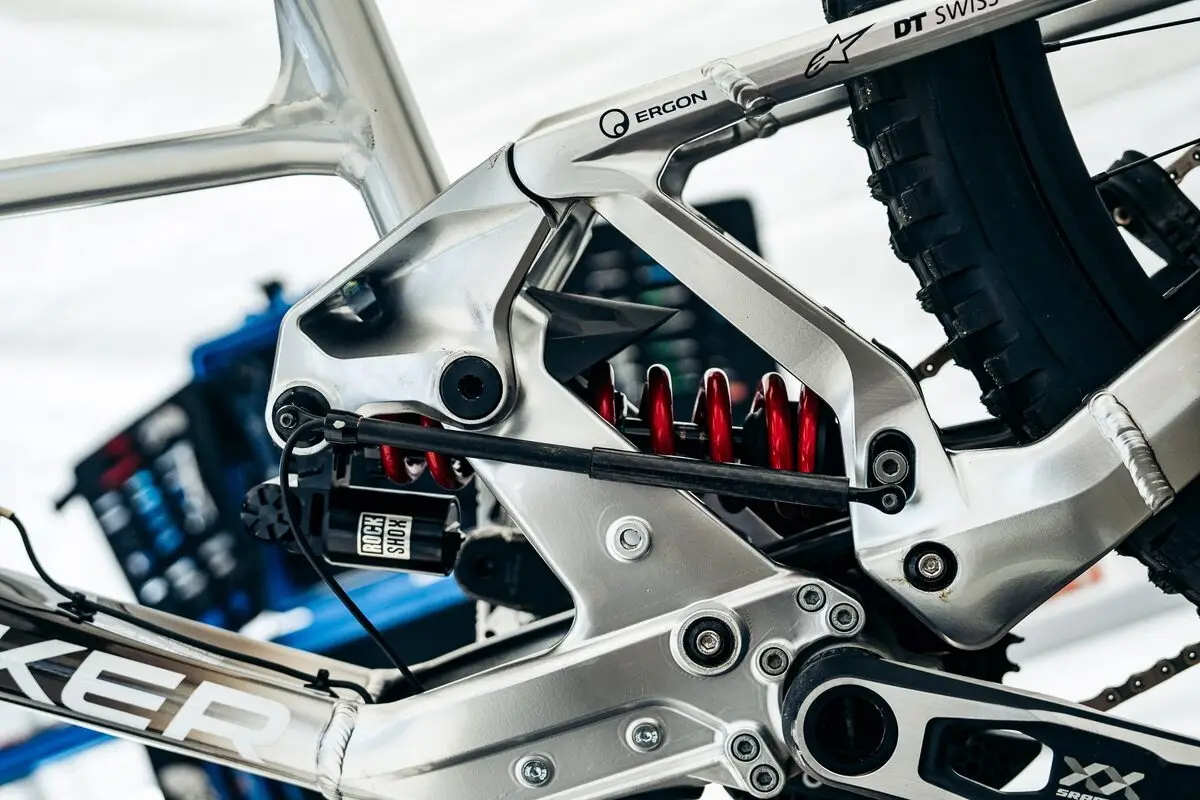
BYB Telemetry stores each bike's leverage curve in the Garage with its measurements, and converts shock movement into wheel travel with it. That is why a recorded histogram reads in wheel travel, and why rear sag is measured against shock stroke rather than wheel travel.
Balancing front and rear on a full-suspension bike
With two ends, each can be right on its own and the bike still be wrong. Overlaying the front and rear travel distributions shows it: in the balanced run shown in the histogram guide, the rear peaks at 25% and the front at 27% of wheel travel.
A hardtail skips this step. Its rear is the tyre and the rider's legs, so only the fork's distribution is read.
How much travel each mountain bike discipline uses
| Discipline | Travel |
|---|---|
| Cross-country | 100–120 mm |
| E-MTB | 140–170 mm |
| Enduro | 150–170 mm |
| Downhill | 180–200 mm |
More travel means more stroke to set up and more room for the two ends to drift apart. Measuring sag is the first check on either kind of bike, as how to measure sag on a mountain bike explains.
Common questions
- Is a hardtail easier to set up than a full-suspension bike?
- Yes: one fork instead of a fork, a rear shock and the balance between them. The fork itself is set up the same way on both.
- What sag should a hardtail fork run?
- The same range as any fork: 15–30% of travel, depending on the discipline. Measure it in the position you ride in most, seated or standing, and use that position every time.
- Can data acquisition be used on a hardtail?
- Yes. A hardtail runs the fork sensor alone; on cross-country bikes BYB recommends a 150 mm front sensor.