
Mountain bike
Suspension data acquisition for mountain bikes
- Fork sensor
- 210 mm
- Shock sensor
- 80 mm
- Typical install
- < 15 min
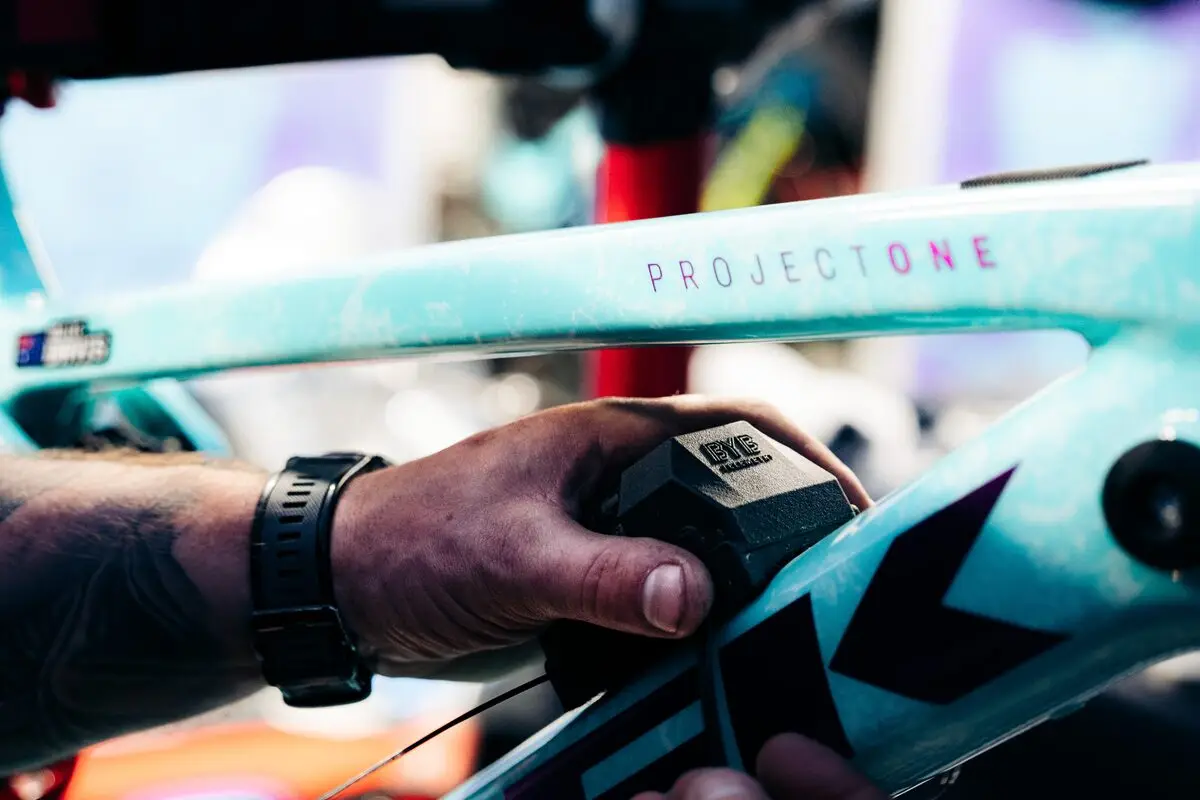
BYB Telemetry fits a mountain bike in under 15 minutes: a 210 mm sensor down the fork, an 80 mm sensor across the shock, and an 80 g unit on the frame.
It records what your suspension did on the trail you just rode, not what you think it did.
The teams racing it
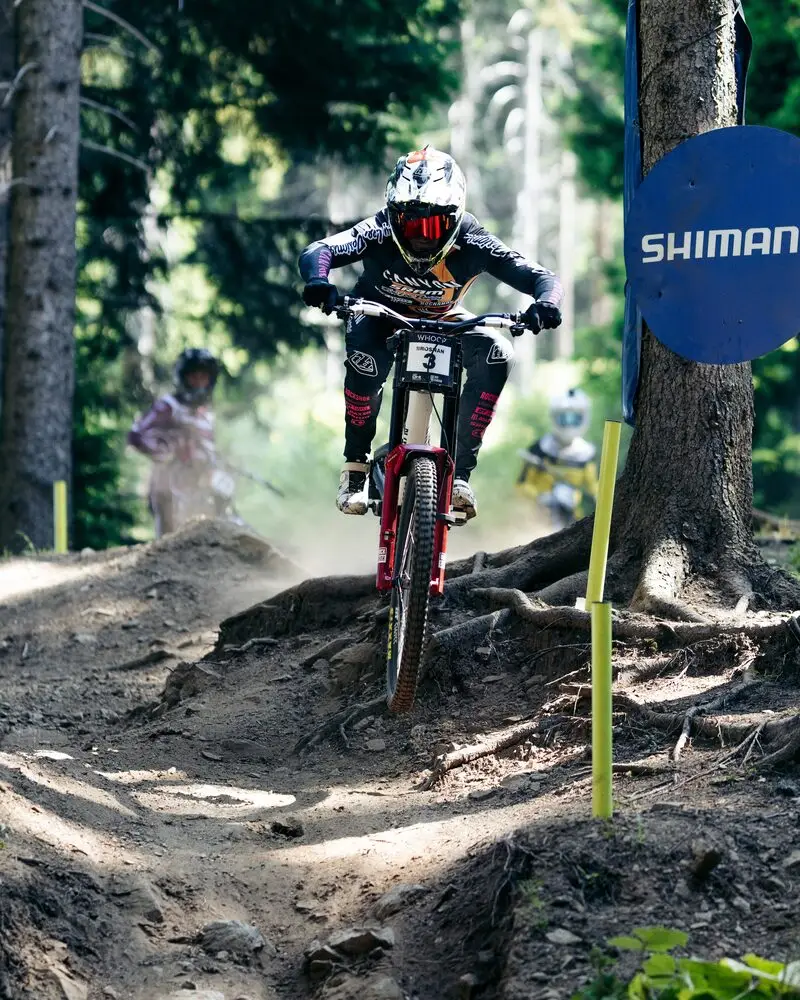
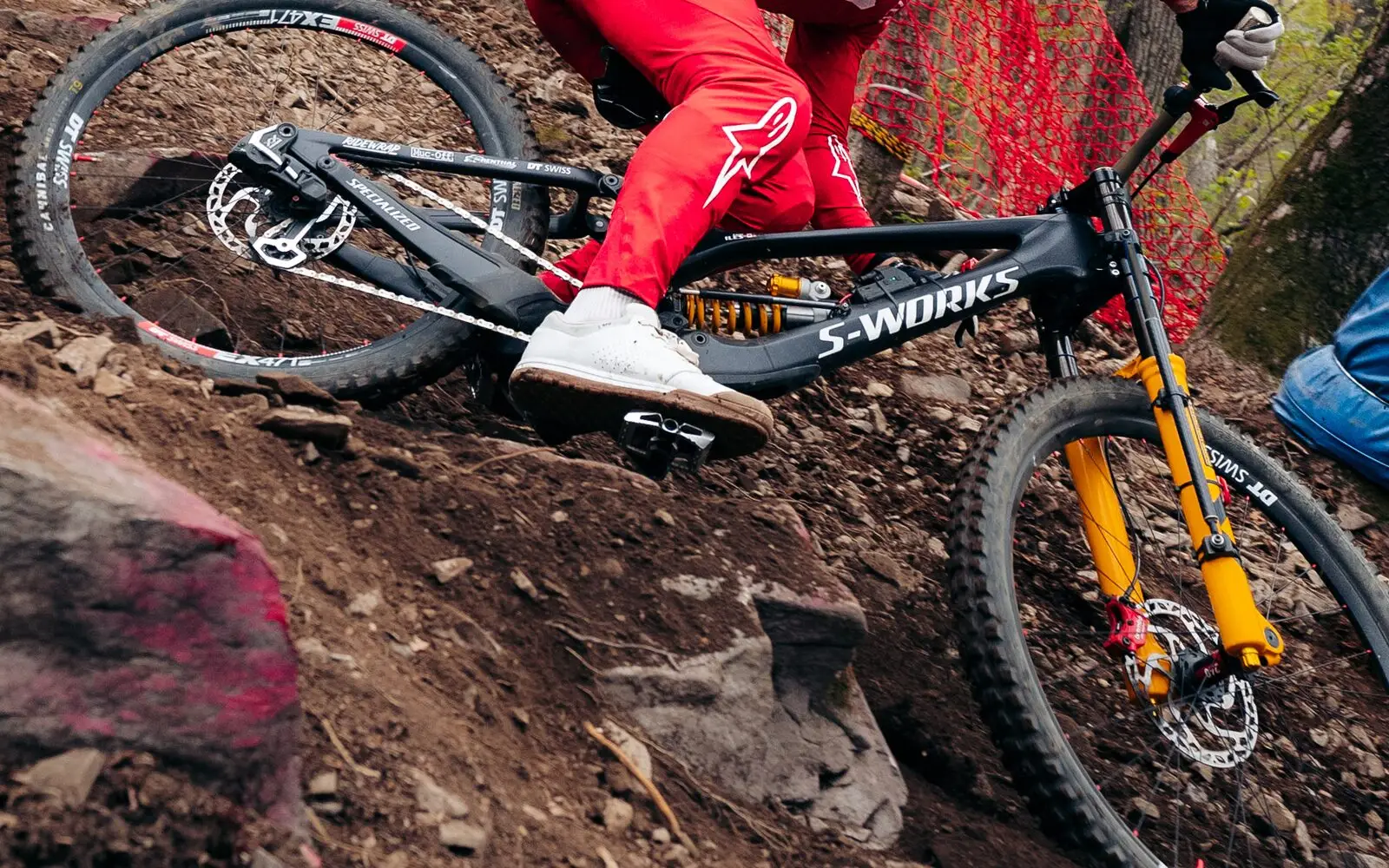
More than 25 official World Cup teams record with BYB Telemetry. These are just a few of them — the same 210 mm and 80 mm sensors, on the same kind of bike.








What the trail does to a fork
Four things a mountain bike suspension does that a rider feels as one thing: “harsh”.
Root chatter
Dozens of small, fast inputs in a second. A fork that cannot recover between them packs down and stops using its travel at all.
Brake bumps
Braking loads the fork and the bumps arrive while it is already compressed. The trace shows the two happening together, which is why brake sensors help here.
Drops and landings
One large, slow input. This is where bottom-outs live, and where adding a volume spacer beats adding air.
G-outs
The bottom of a compression, where the bike weighs several times what it does standing still. Slow and heavy, and nothing like a root.
What your suspension actually did on that section
Eight seconds of one real run, recorded a thousand times a second.
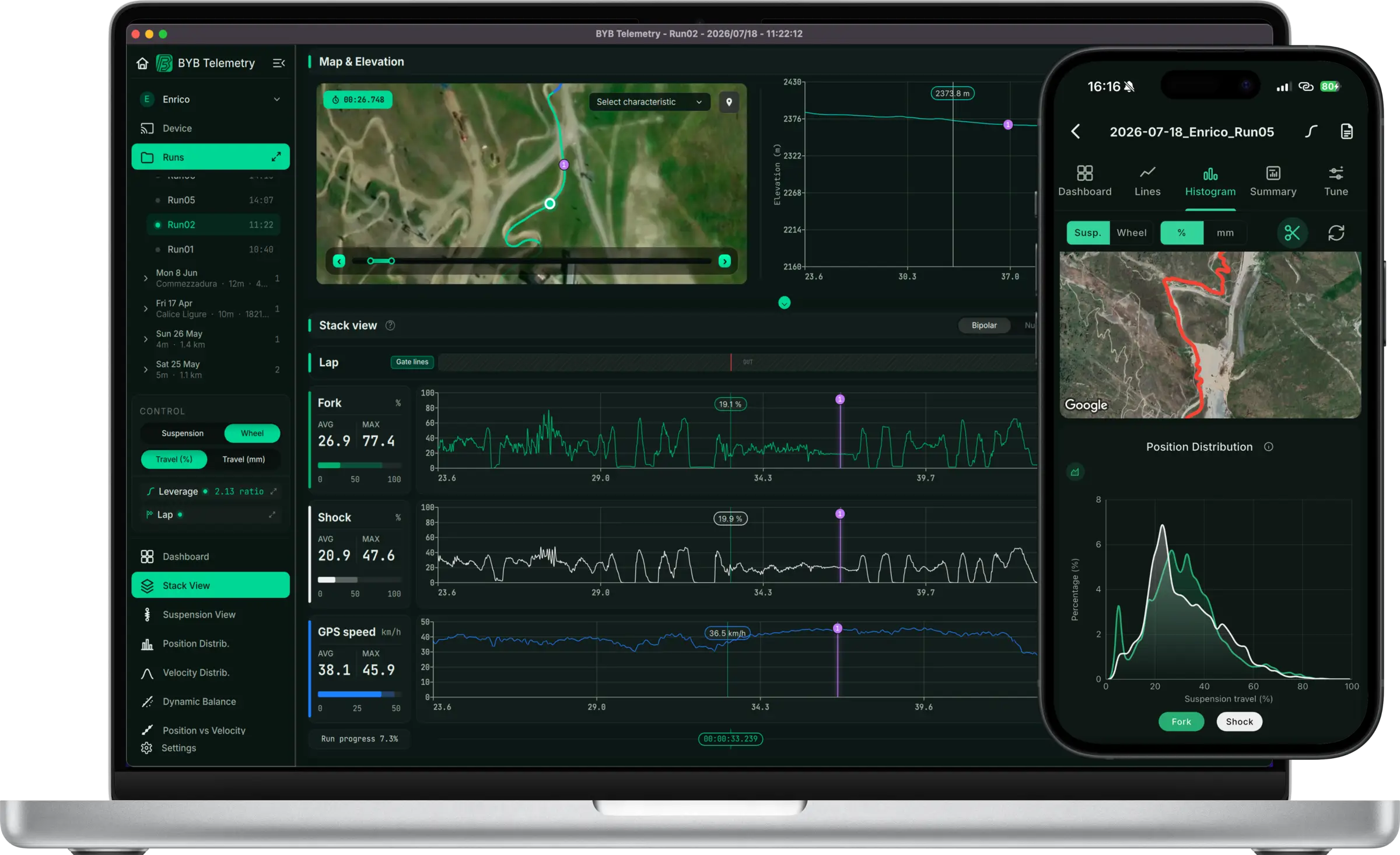
Drag the cursor to read the fork and the shock at any instant. In the software any other channel lays over the same time axis — speed, for example — so a change in the suspension can be read against what the bike was doing when it happened.
Where each sensor goes
80 g on the front triangle. Internal IMU and motion sensing here.
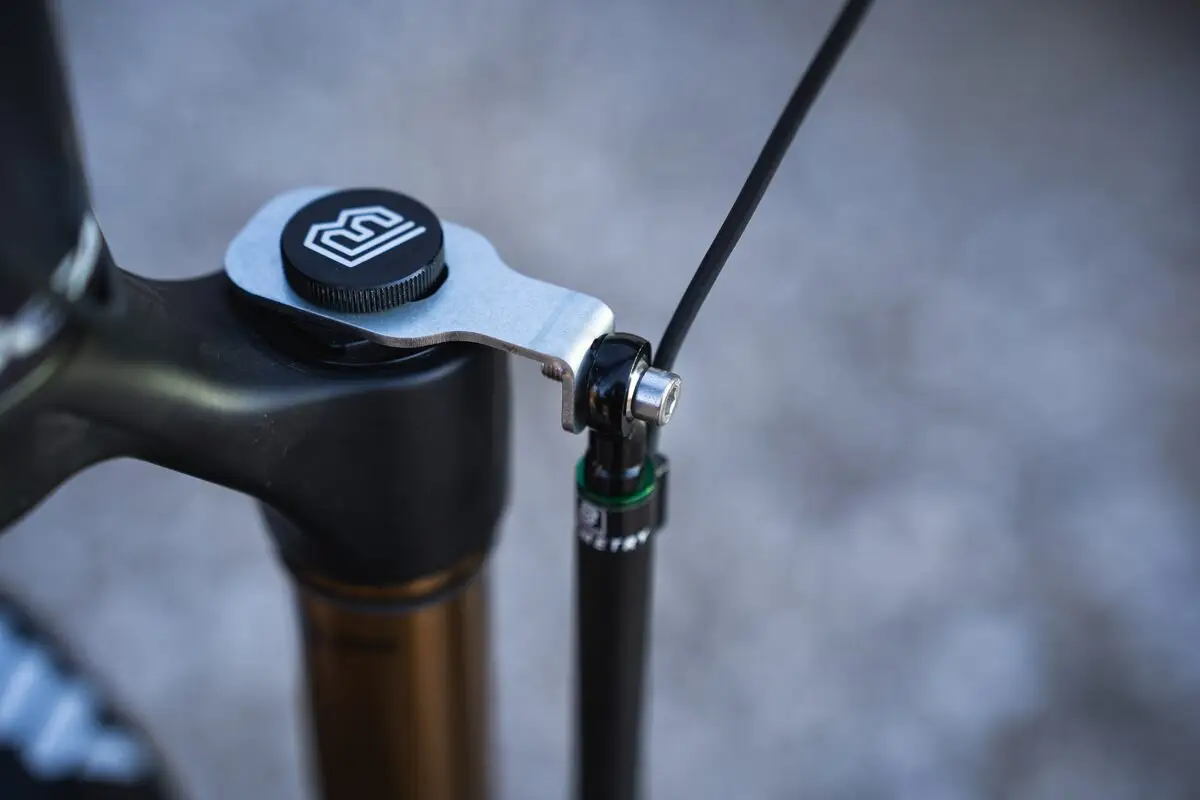
A 210 mm sensor down the stanchion, on removable auto-aligning joints.
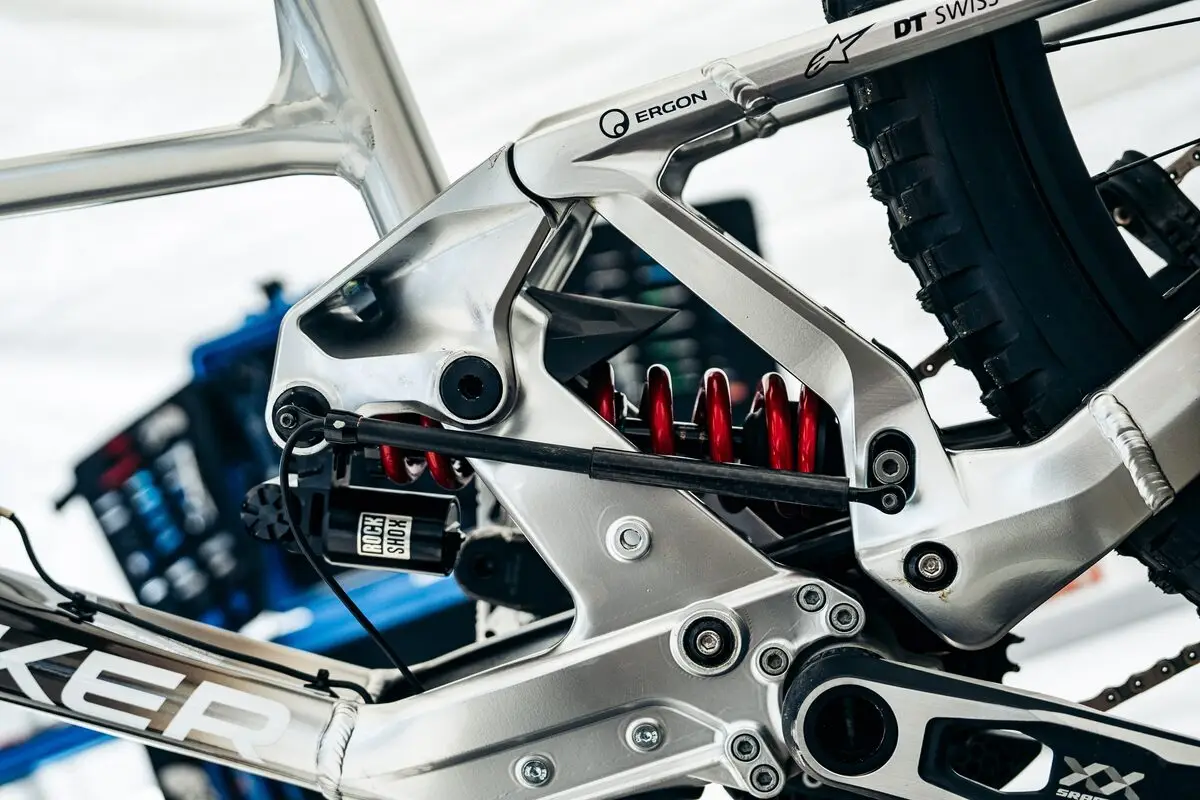
An 80 mm sensor across the shock. Air or coil — the mount does not care.
At the levers, fitted without opening the hydraulic circuit. BrakeAce compatibility is available.
At the front wheel, reading real wheel speed. A second sensor at the rear wheel is what shows it locking under braking.
On the top tube, where nothing is between it and the sky.
At the axles, on Telemetry V3 Pro. They read what the wheel did before the suspension got to it.
On the bar, on Telemetry V3 Pro. Press it to mark a point on the track and find it again in the data.
Will it fit your bike?
The mounts are universal. In practice that means almost every trail, enduro and downhill bike built in the last decade.
Air or coil
The shock mount works with both. Nothing is clamped to a stanchion seal and nothing needs a bracket made for your frame.
Full suspension or hardtail
A hardtail runs the fork sensor alone. Everything else on the bike works the same way.
E-MTB
No difference to the install. The unit is 80 g and the sensors add no meaningful weight to a bike that already carries a motor.
Not sure about yours?
Our standard mountings fit the majority of suspensions and frames, and it is always possible to find a way to fit them to any bike.
Or print the mount you need
BYB Tech publishes the 3D-printable mount models as an open-source library, free to download. If your bike needs a bracket the standard mounts do not cover, the files are there and so is the printer at your local makerspace.
The sensors, measured
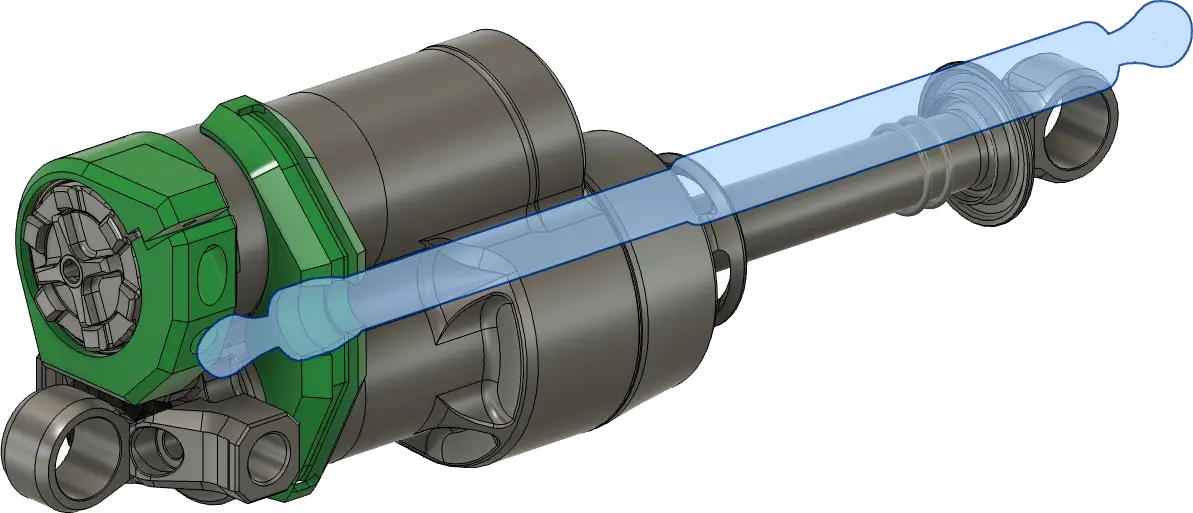
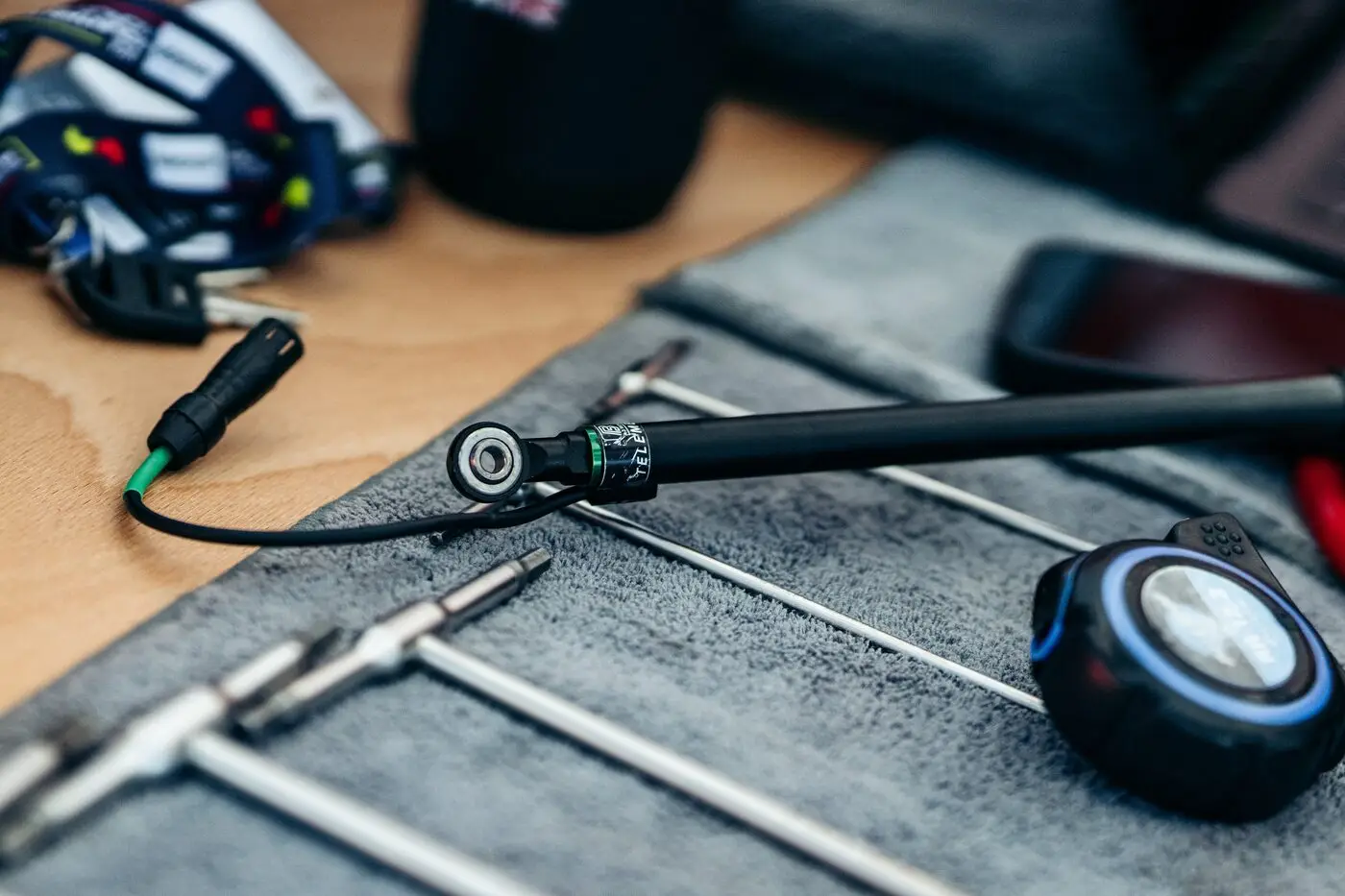
The same sensors go in the Telemetry V3 and the V3 Pro. Only the unit reading them differs. The connectors are fast to connect.
210 mm and 80 mm
Fork and shock. The strokes are sized for mountain bike travel — motocross uses 350 mm and 150 mm.
IP65 sealed
Dust-tight, and rated against water from any direction.
Low actuation force
The sensor does not fight the suspension. What it measures is what the fork was doing, not what the fork was doing plus a sensor.
Auto-aligning removable joints
Universal joints that find their own angle, and come off when the bike goes in a box.
Your discipline
Same hardware, same install. What changes is the travel it is measuring and what the trail does to it.
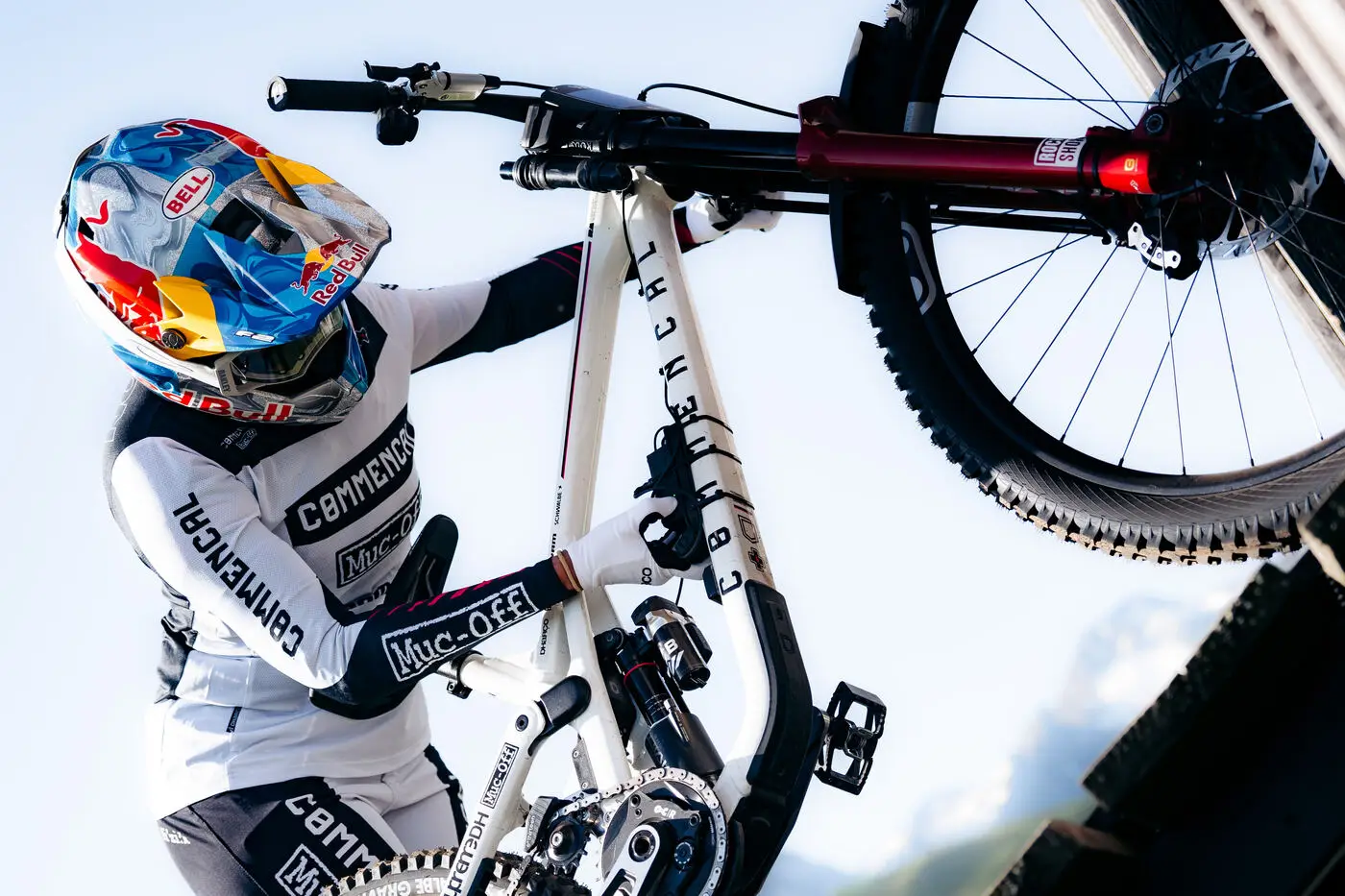
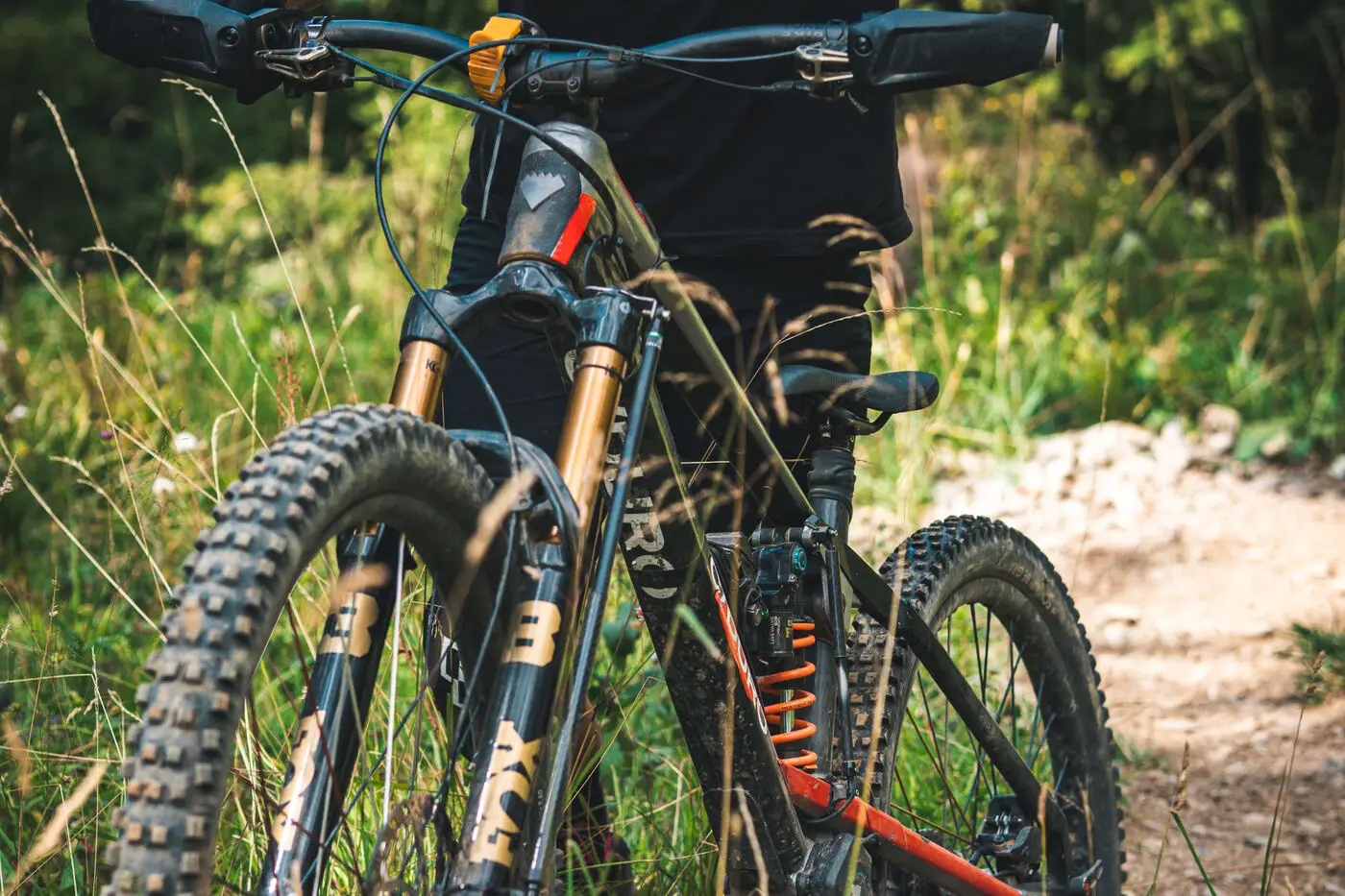
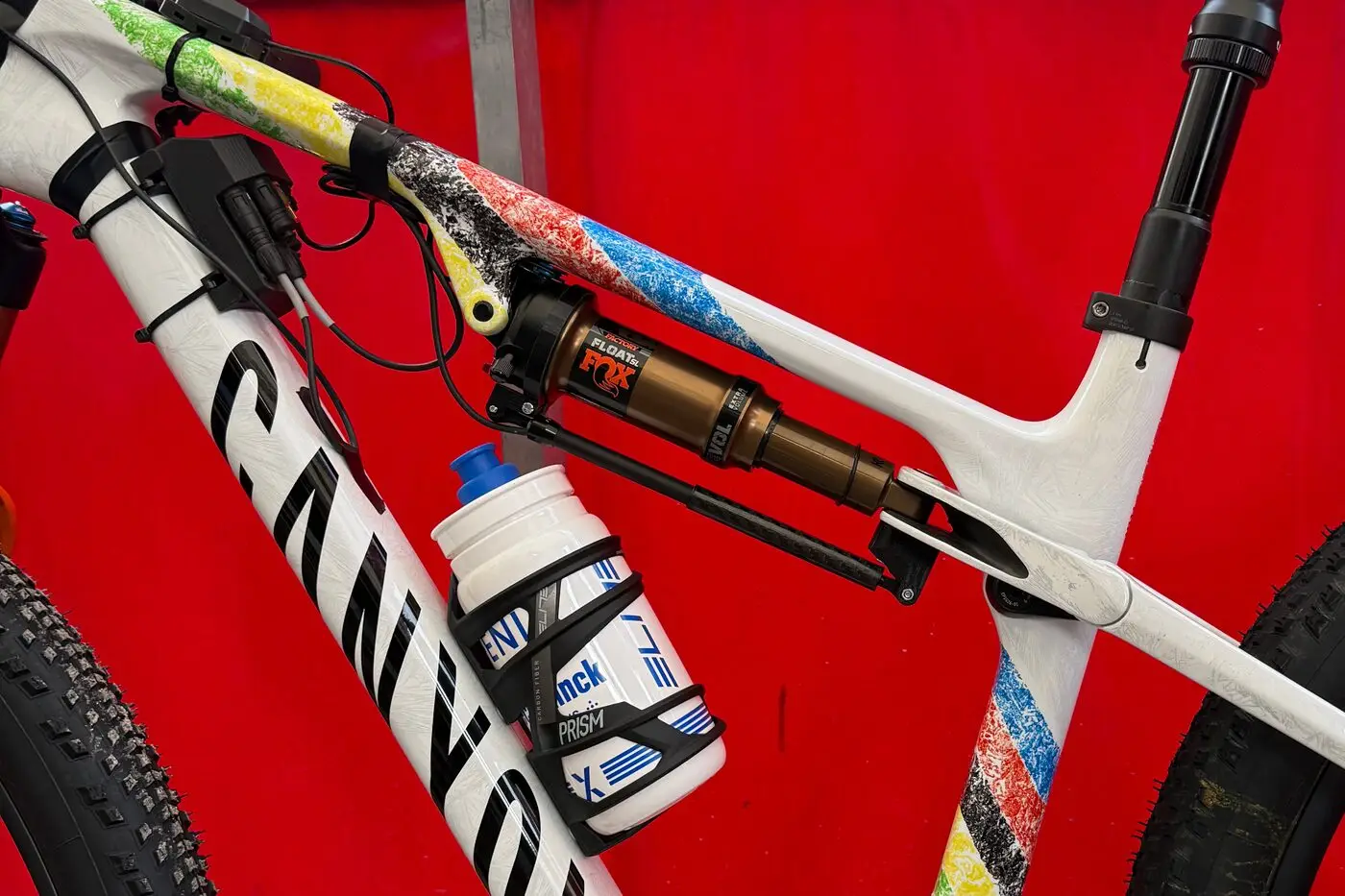
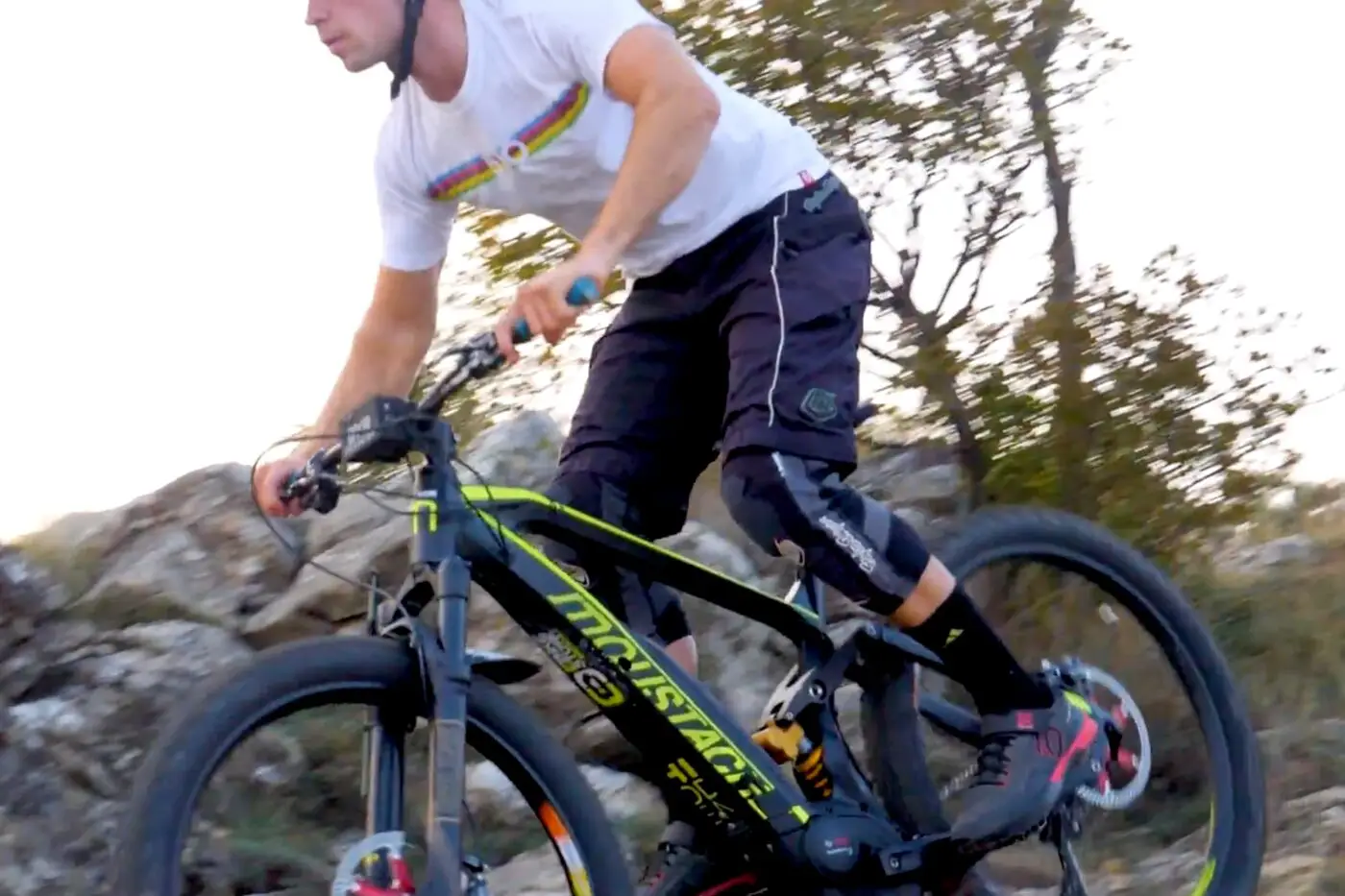
180–200 mm
The most travel and the biggest hits. Bottom-outs are the first thing the data shows, and the easiest to fix badly by simply adding air.
150–170 mm
A bike that has to climb and descend. The data usually shows a fork set up for one of those two jobs and not the other.
100–120 mm
The least travel, so the least room for error. Small setup changes move a bigger share of the total. For this travel BYB Tech recommends a 150 mm front sensor and an 80 mm rear.
140–170 mm
Extra weight changes sag and how fast the suspension recovers. A setup carried over from an analogue bike is rarely right.
Sensor strokes are made to order. Tell BYB Tech the travel you run and the lengths are matched to it.
Brakes and speed
Both are optional. Each answers a question the suspension traces alone cannot.
Brake sensors
Fitted without opening the hydraulic circuit. Digital records clean on-off timing; analog records how hard. Add them to see whether the fork dived on the trail or on the brake, and to help correct a rider's bad braking habits.
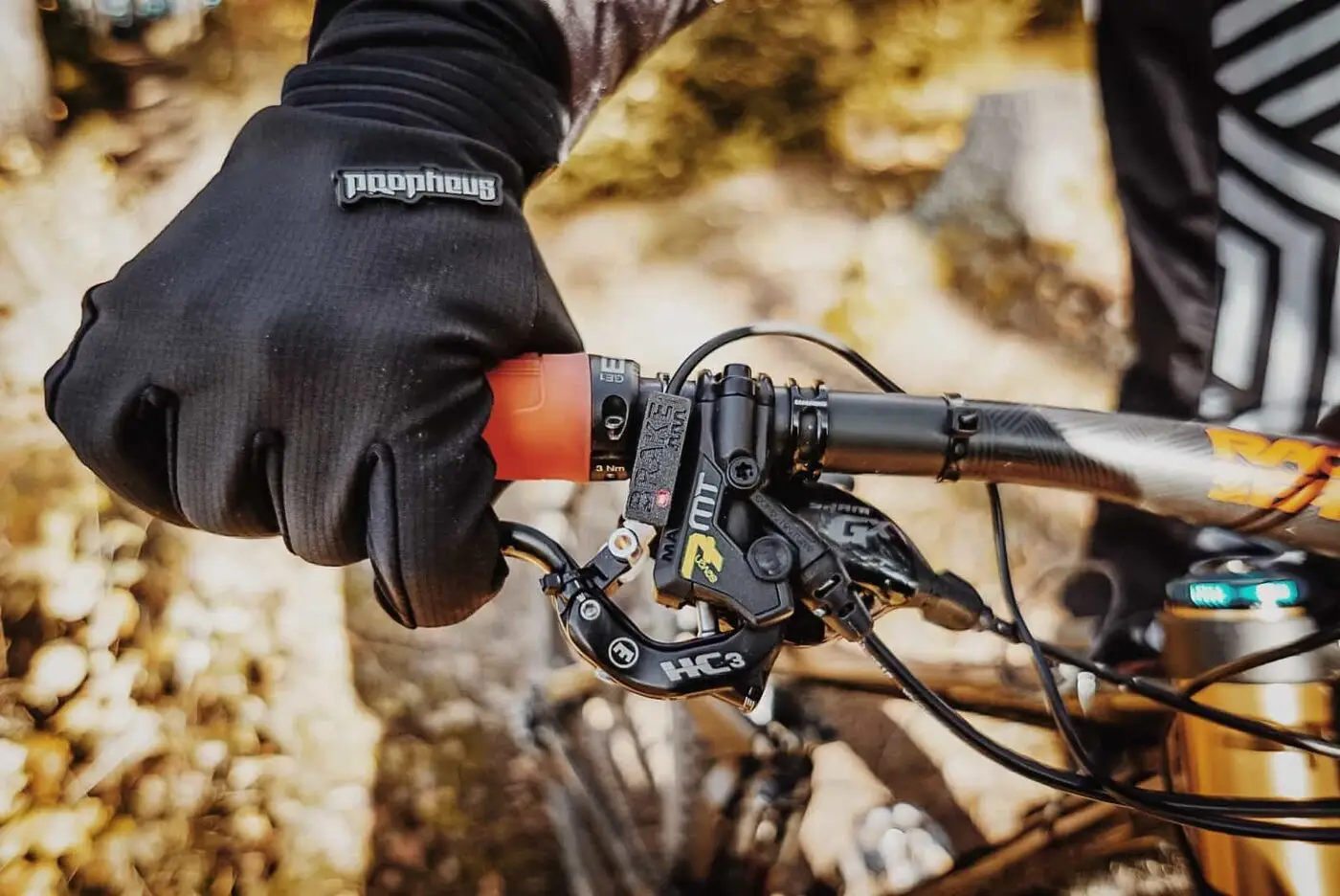
At the lever, with the hydraulic circuit never opened. Speed sensor
Reads speed at the wheel itself, so every run carries real wheel speed alongside the suspension traces. Run one at the rear as well and a locked wheel shows in the trace as rear speed falling away from the front.
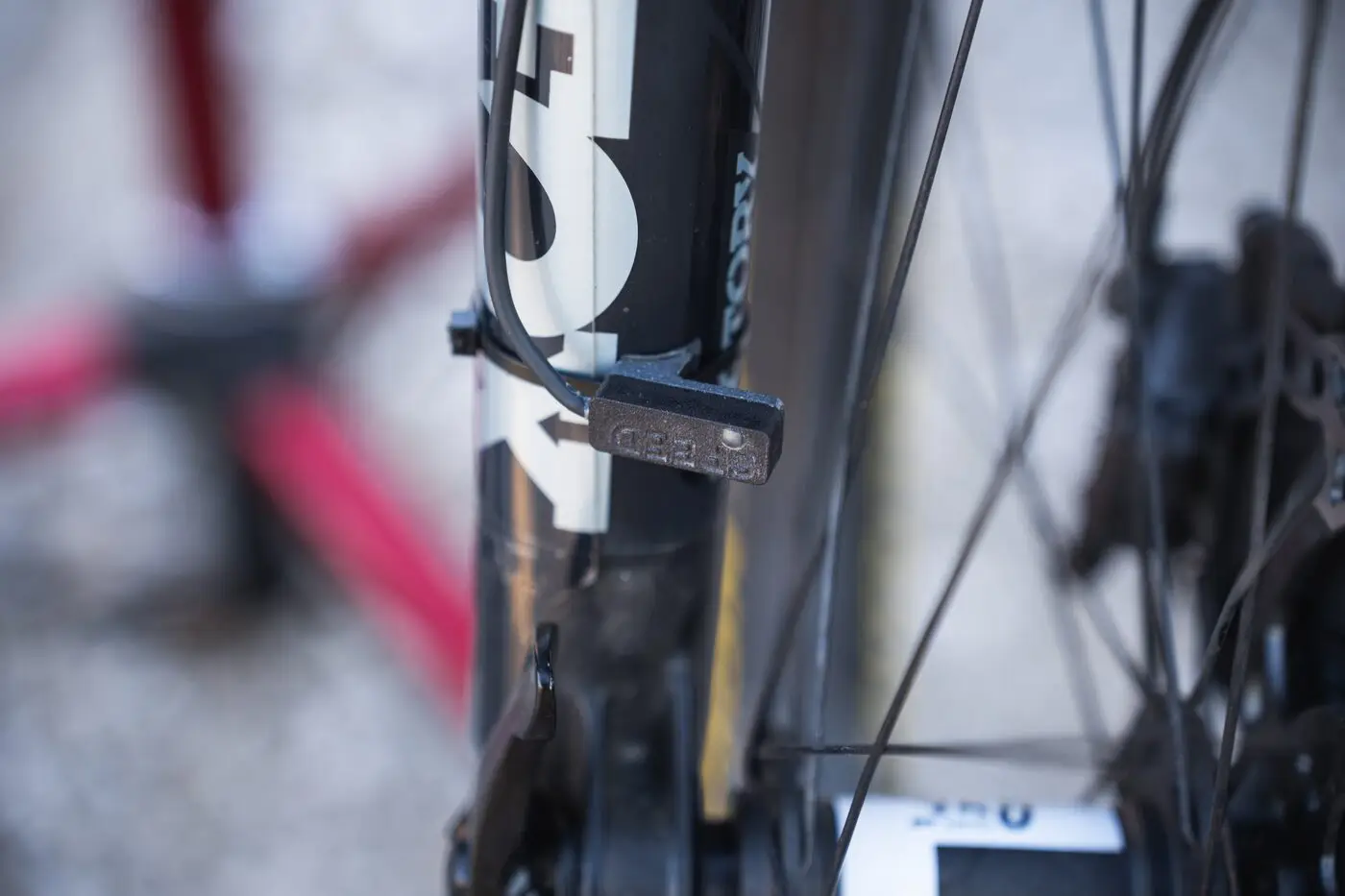
At the fork lower, facing the wheel it reads.
What you'll actually look at
Fork and shock open on one time axis, so a hit on the front and what the rear did about it are read together instead of one after the other. Mac and Windows for the analysis, iOS and Android at the trailhead for pulling a run off the bike between laps.
Someone near you can fit it
+189 workshops and suspension technicians across +37 countries already run the system. They will fit the sensors to your bike, record a run with you, and read it back with you.
You do not need one to own a Telemetry. You want one the first time it goes on the bike, or when a setup question is worth an hour of somebody who does this every week.
FAQ
Questions about mountain bike data acquisition
- How long does it take to fit to a mountain bike?
- Typically under 15 minutes for the fork and shock sensors, and quicker once you have done it. The mounts are universal, so there is nothing to order for your frame.
- Will the sensors fit my fork and shock?
- The 210 mm fork sensor and 80 mm shock sensor cover mountain bike travel, and the mounts work with air and coil. Our standard mountings fit the majority of suspensions and frames, and it is always possible to find a way to fit them to any bike.
- Do I need brake sensors on a mountain bike?
- No, they are optional. They are worth adding when you want to separate a fork diving under braking from a fork diving because of the trail, which is the most common misreading of a suspension trace. Brake data also helps a rider improve their skills and correct bad braking habits.
- Does it work on an e-MTB?
- Yes, and the install is identical. The extra weight of an e-MTB changes sag and recovery, so a setup carried over from an analogue bike is usually the wrong starting point — which is exactly what the data shows.
- Will it survive a wet ride and a jet wash?
- The sensors are IP65 sealed: dust-tight, and rated against water from any direction.
Ride it, then read it
Fit it in 15 minutes, record a run, and see what your suspension actually did.