
Moto
Suspension data acquisition for motorcycles
- Fork sensor stroke
- 350 mm
- Shock sensor stroke
- 150 mm
BYB Telemetry fits any motorcycle with up to 350 mm of fork stroke and up to 150 mm at the shock.
It records what your suspension did on the lap you just rode, not what you think it did.
What the track does to a fork
Four things a motorcycle suspension does that a rider feels as one thing: the bike is fighting them.
Whoops
A row of bumps taken one after another. The fork has no time to come back up between them, so it sits lower with every hit and runs out of travel before the end.
Braking bumps
The ripples that form where everyone brakes for a corner. The fork is already pushed down by the brake when they arrive, so it dives further than either would send it alone.
Landings
The hardest single hit on the track. Soft enough to work everywhere else and it bottoms out on landing; firm enough to take the landing and it is harsh everywhere else.
Ruts and hard pack
A rut holds the bike in line, so the suspension only works up and down. Hard pack gives the tyre little to grip, so the shock has to keep it planted. One setting cannot suit both.
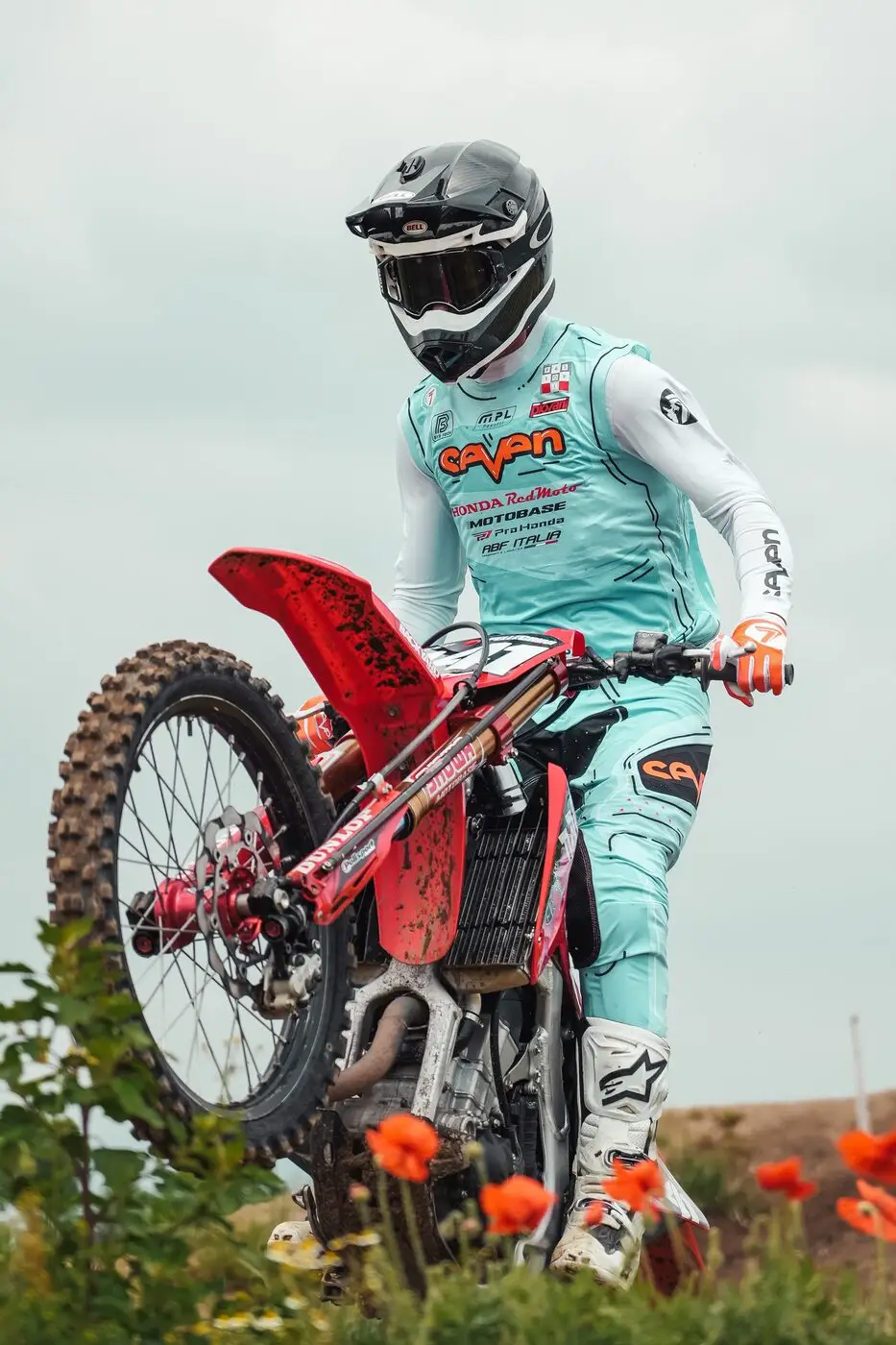
What your suspension actually did on that lap
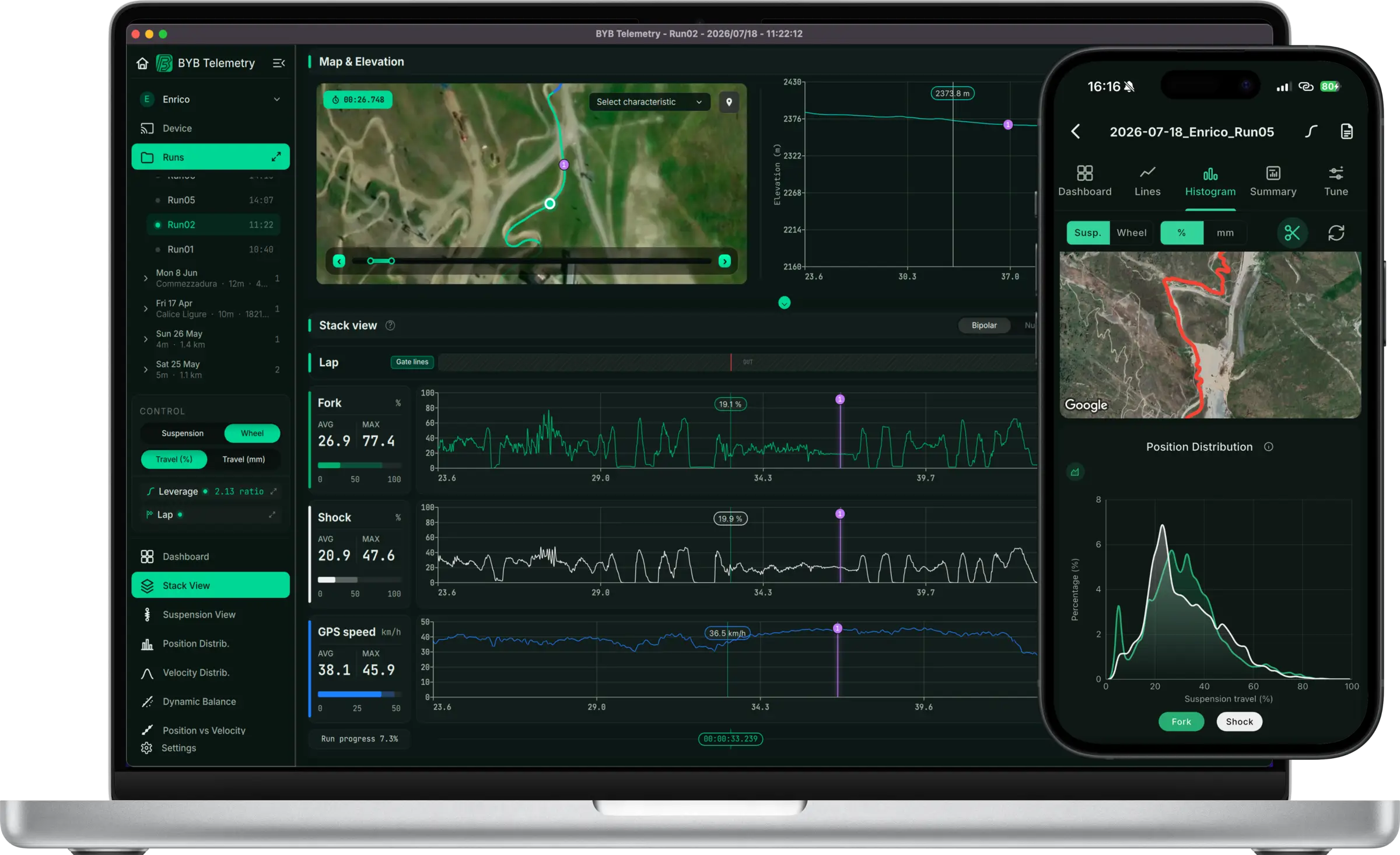
Eleven seconds of one supercross lap, recorded a thousand times a second.
Drag the cursor to read the fork and the shock at any instant. In the software every other channel this unit recorded lays over the same time axis — speed and the accelerometers among them — so a movement in the suspension can be read against what the bike was doing when it happened.
Where each sensor goes
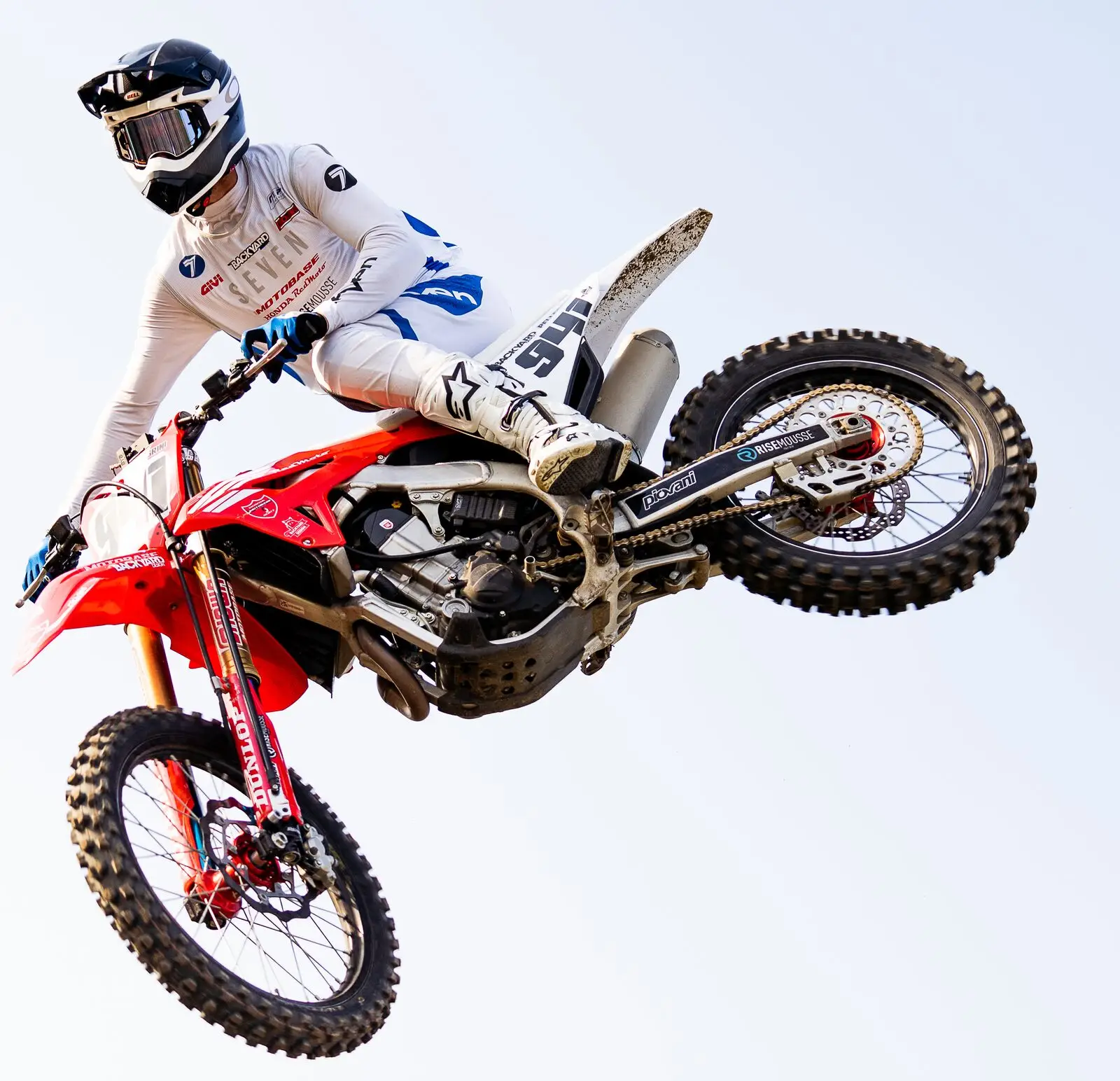
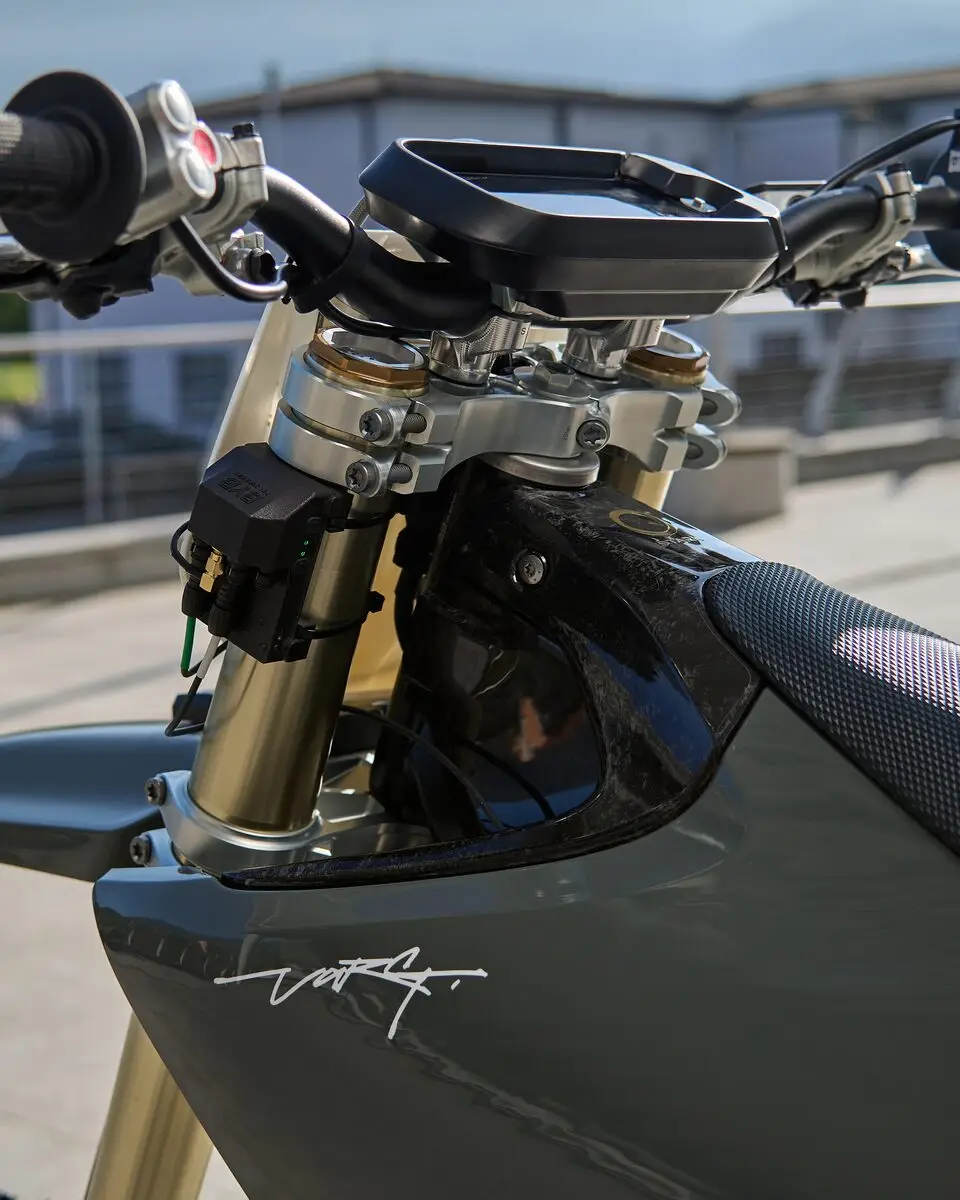
Mounted on the moto. Every sensor lands there, and the internal IMU reads motion here too.
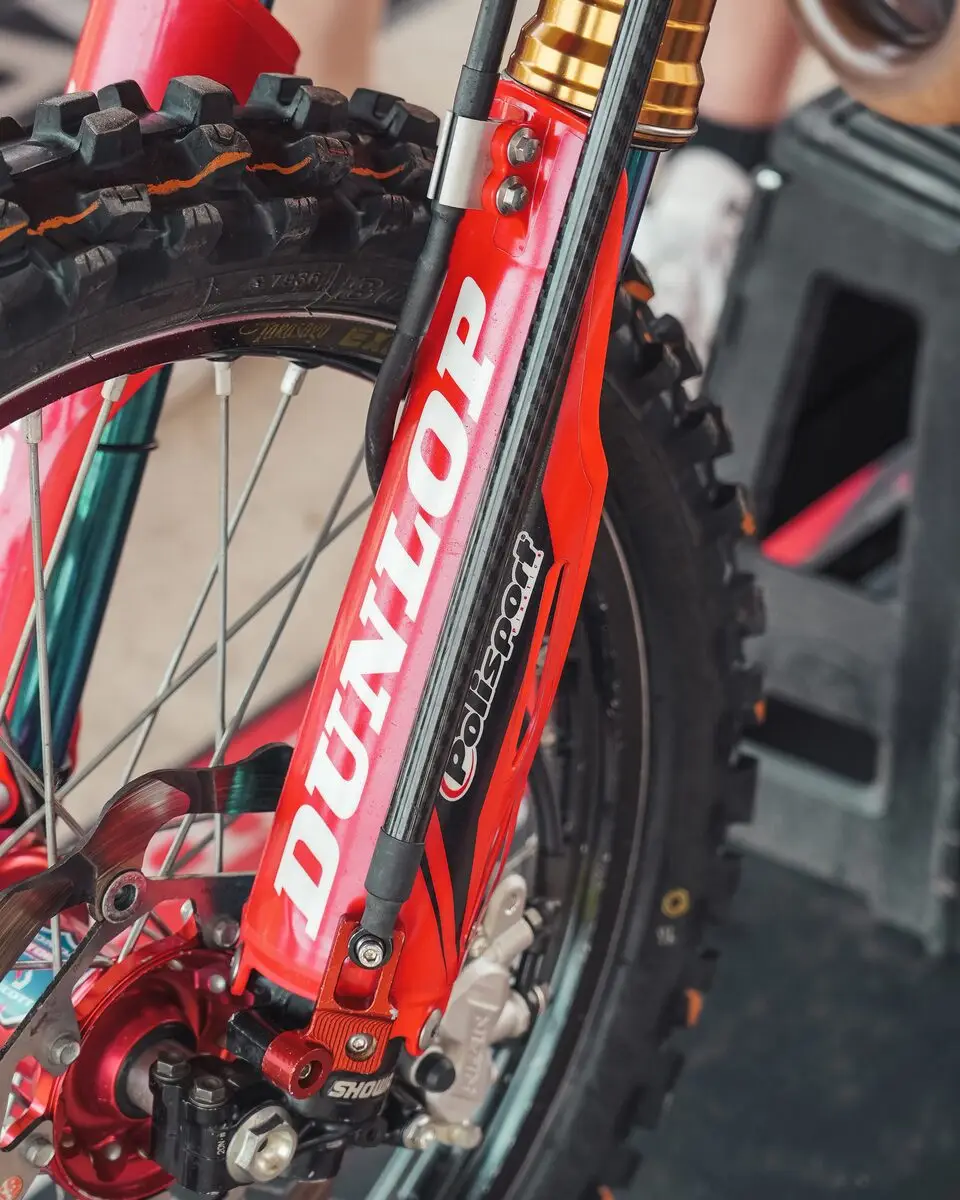
Down the fork leg, on removable auto-aligning joints. It measures any stroke up to 350 mm.
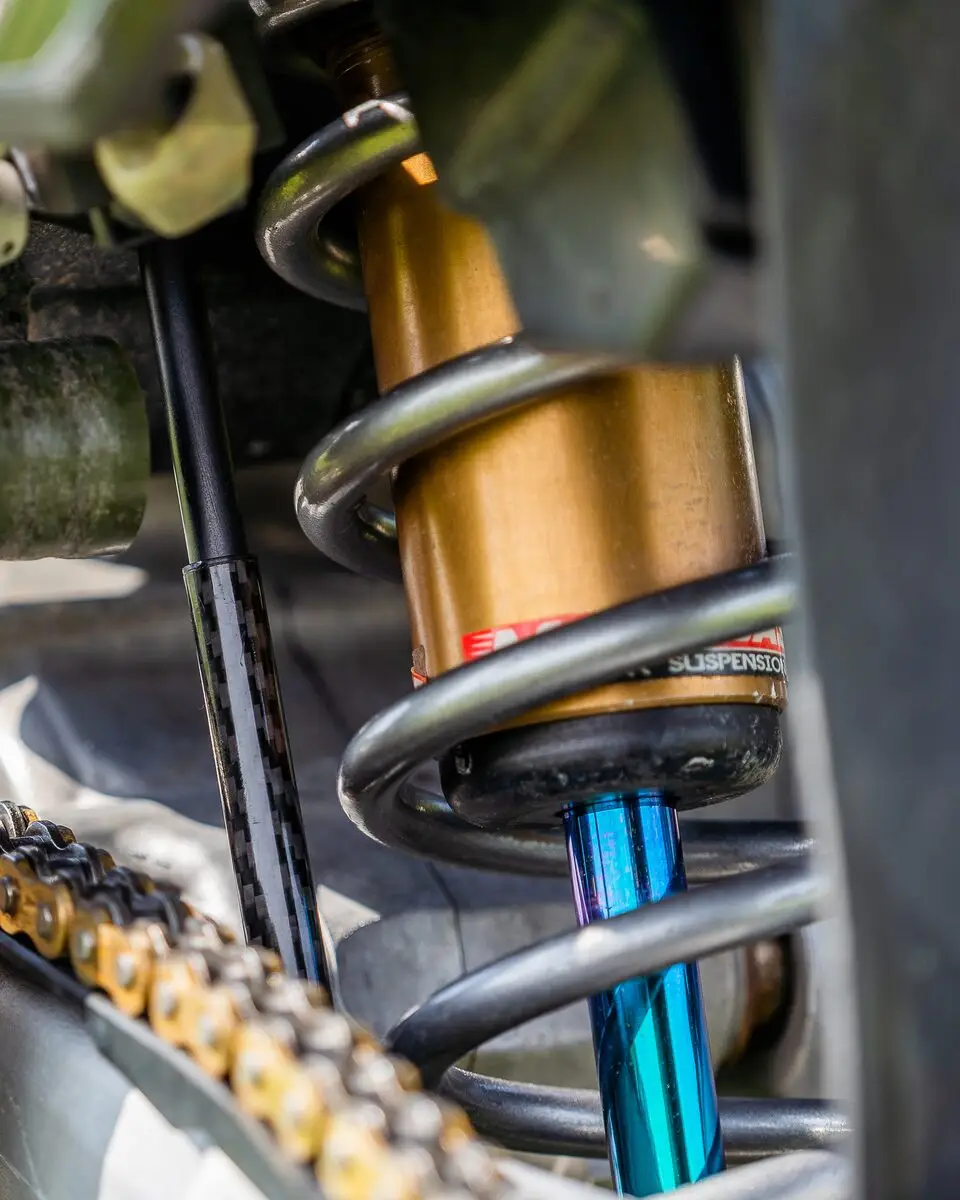
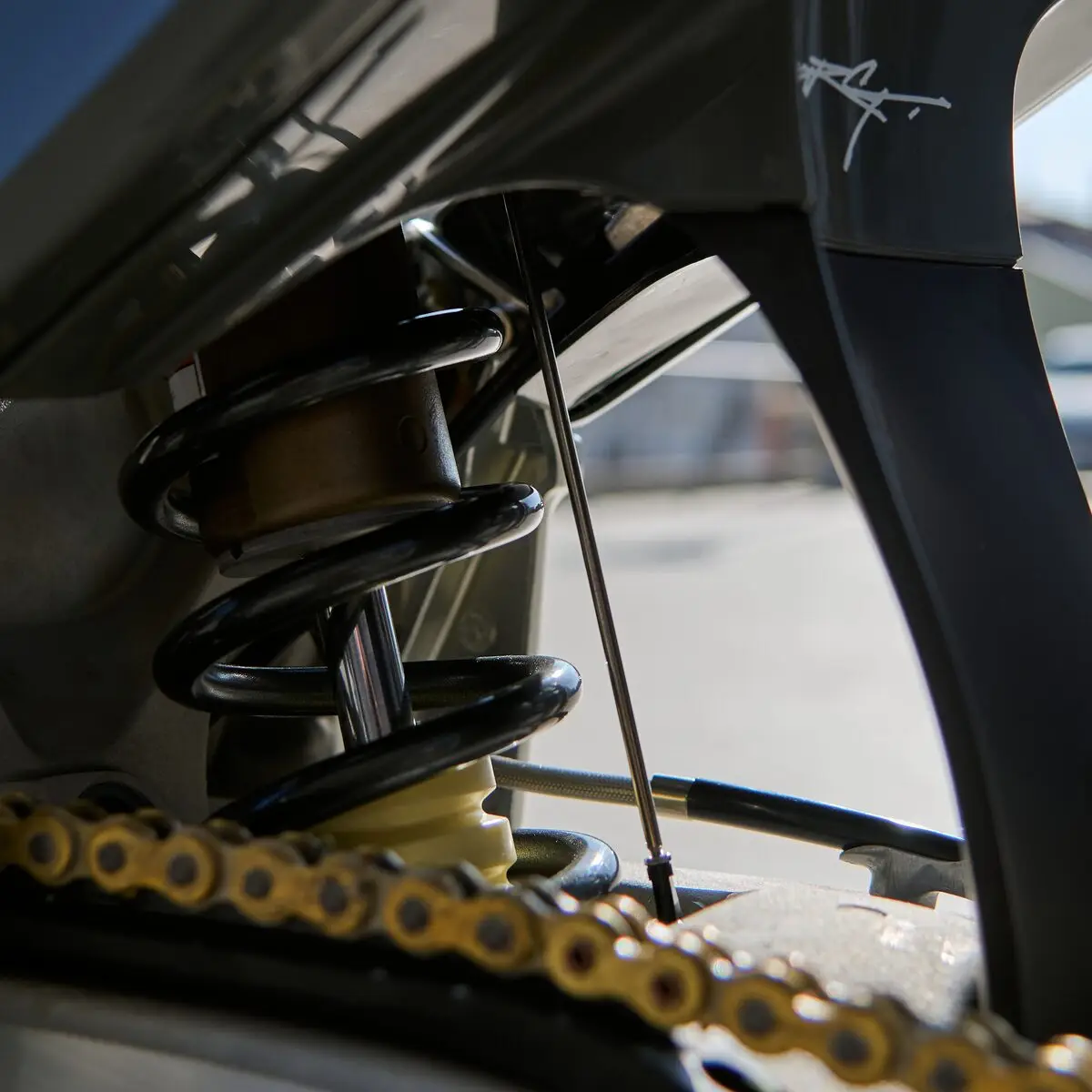
At the shock, measuring any stroke up to 150 mm. Linkage or linkage-free — the mount does not care.
At the brake, on Telemetry V3 Pro. They fit without bleeding the line.
On the front wheel, on Telemetry V3 Pro, taking speed off the wheel itself. Fit the rear one too and the data shows you a locked wheel.
In the unit, on the moto. Position and speed across the lap.
At the axles, on Telemetry V3 Pro. They read the hit the wheel took before the fork or the shock saw any of it.
On the bar, on Telemetry V3 Pro. Press it going into a section and it is marked in the recording for afterwards.
Will it fit your bike?
The mounts are universal. Motocross, enduro, supermoto, speedway, road — the sensor fixes to the joints, not to a model.
Motocross and enduro
The longest travel of anything here, and the reason the strokes are 350 mm and 150 mm. Conventional or inverted forks, linkage or linkage-free at the rear.
Supermoto and road
Much shorter travel, and the same two sensors. A sensor that measures up to 350 mm reads a road or supermoto fork just as well, and the shock mounts the same way.
Front only, or both ends
A front-only install answers most fork questions. Reading the shock at the same time is what turns two separate setups into one balance.
Not sure about your bike?
The fitment list by fork and shock model is not published yet. Tell us what you ride and we will tell you.
Or print the bracket you need
If your bike needs a bracket the standard mounts do not cover, the mount models are free and 3D printable.
The sensors, measured
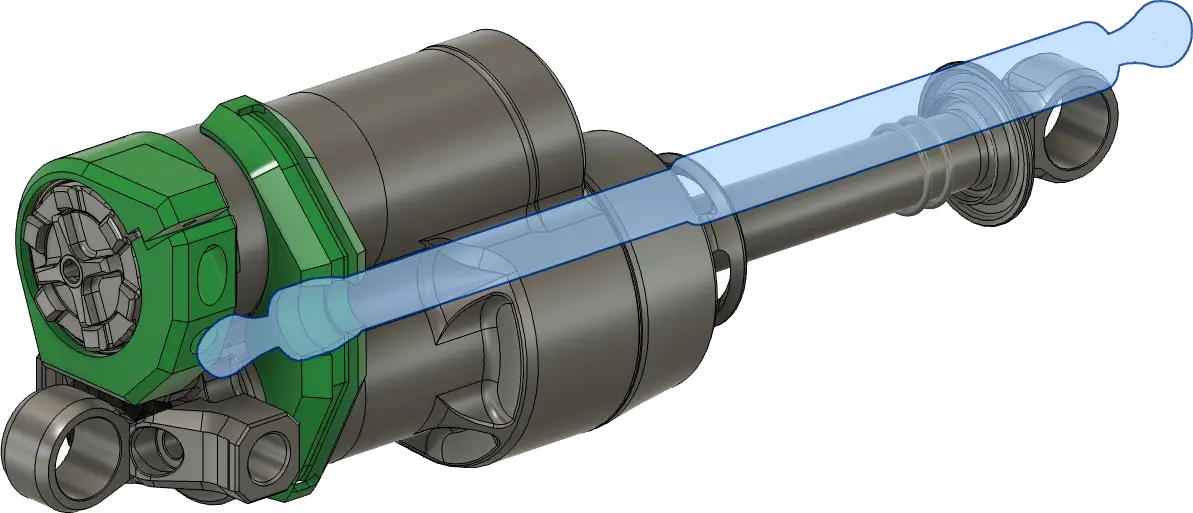
The same sensors go in the Telemetry V3 and the V3 Pro. Only the unit reading them differs.
Up to 350 mm on the fork
The sensor's stroke is 350 mm and it measures anything shorter, so a full-travel motocross fork and a road motorcycle take the same part.
Up to 150 mm at the shock
Measured at the shock rather than at the wheel, so the figure is shock stroke and the software does the rest.
Removable joints
Auto-aligning eyelet joints at both ends. They come off with the sensor, so a fork service does not mean a re-install from scratch.
IP65, and light to move
Dust-tight and sealed against water from any direction — and no further, on purpose. Heavier sealing takes more force to move the shaft, and a sensor that resists the suspension changes the thing it is there to measure.
Your discipline
Same hardware, same install. What changes is the travel it is measuring and what the surface does to it.
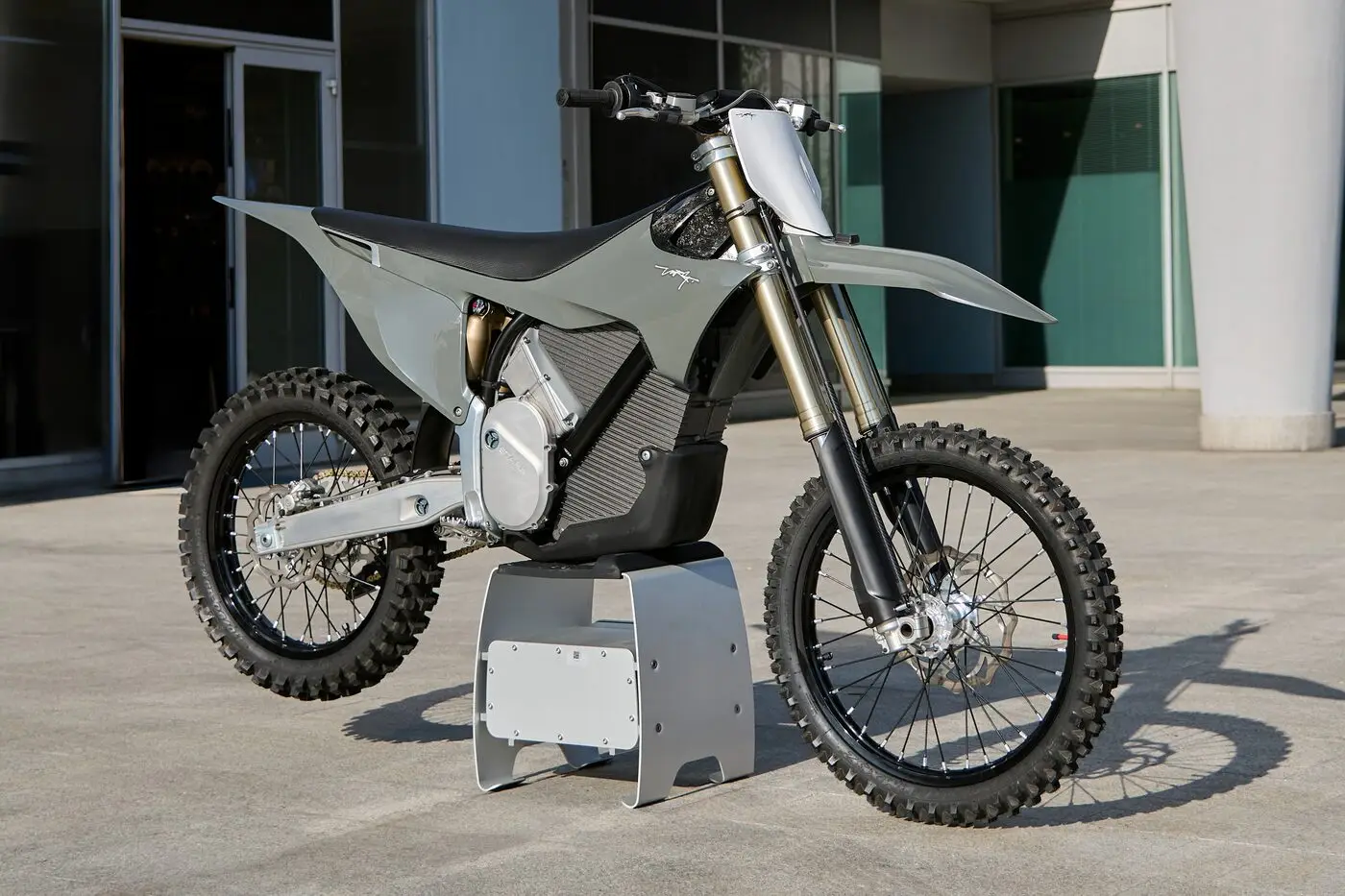
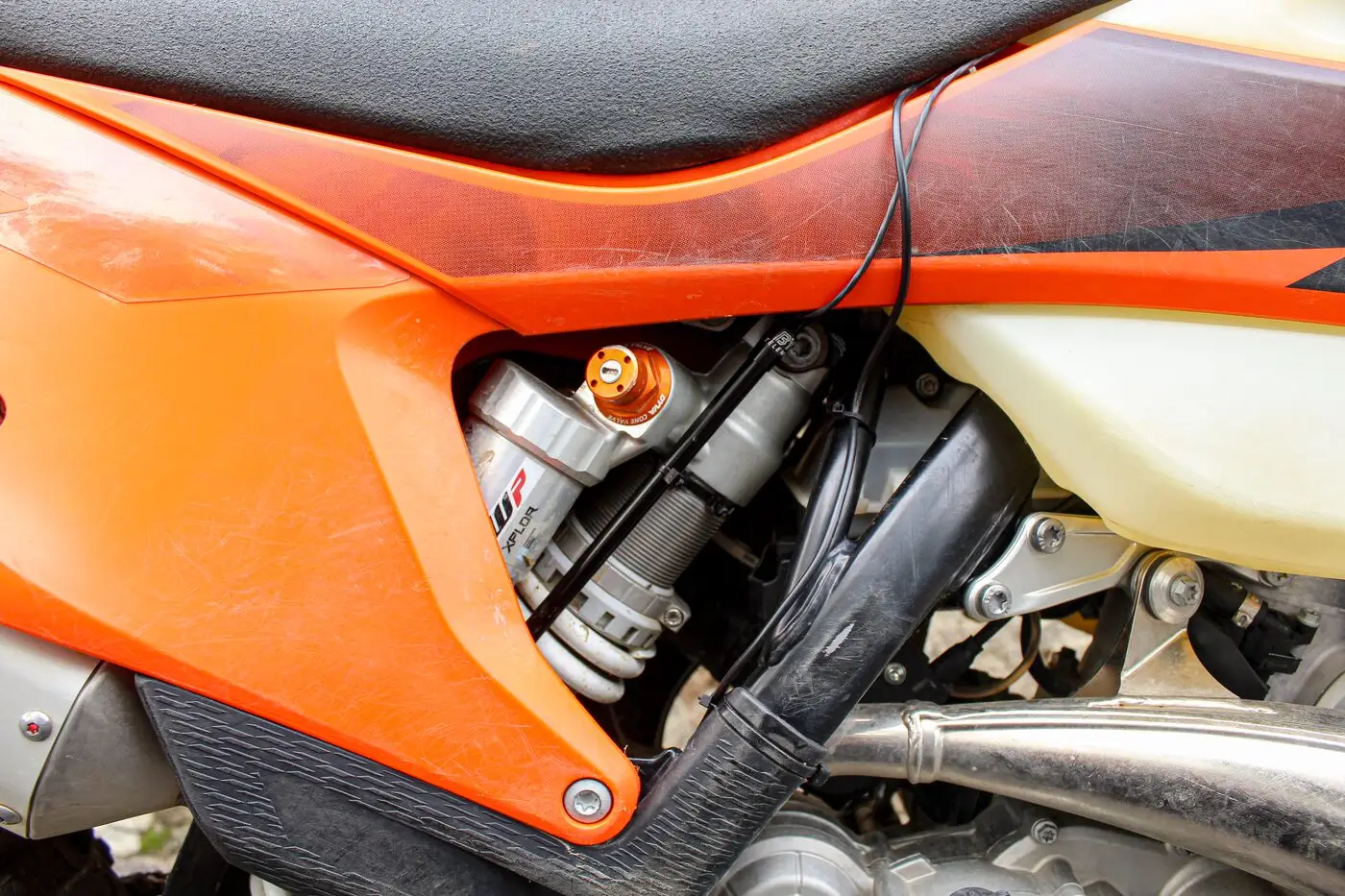
Prepared tracks, and the most repeated inputs of any discipline here. Whoops and braking bumps arrive faster than the suspension returns, and a landing is the biggest single hit the setup has to absorb.
Natural terrain, where nothing arrives twice the same way. Rocks and roots load the suspension at angles a prepared track never does, and the useful setting is the one that copes rather than the one that is fastest anywhere.
The least travel here, so the least room for error. Braking and drive move a bigger share of the total than any bump does, and a small change at the clicker is a large change in the data.
A loose surface, an oval, and no front brake. The rear does almost all the work, and what the data shows is how the bike sits through a turn rather than how it survives a hit.
Whatever you ride, the sensors and the mounts are the same. Only the bike under them changes.
Brakes and speed
Both are Telemetry V3 Pro sensors, and each settles something the fork and shock traces leave open on their own.
Brake sensor
On Telemetry V3 Pro, it shows how the rider uses the front and the rear brake. The analog sensor reads how hard the lever is pulled; the digital one reads only whether the brake is on or off.
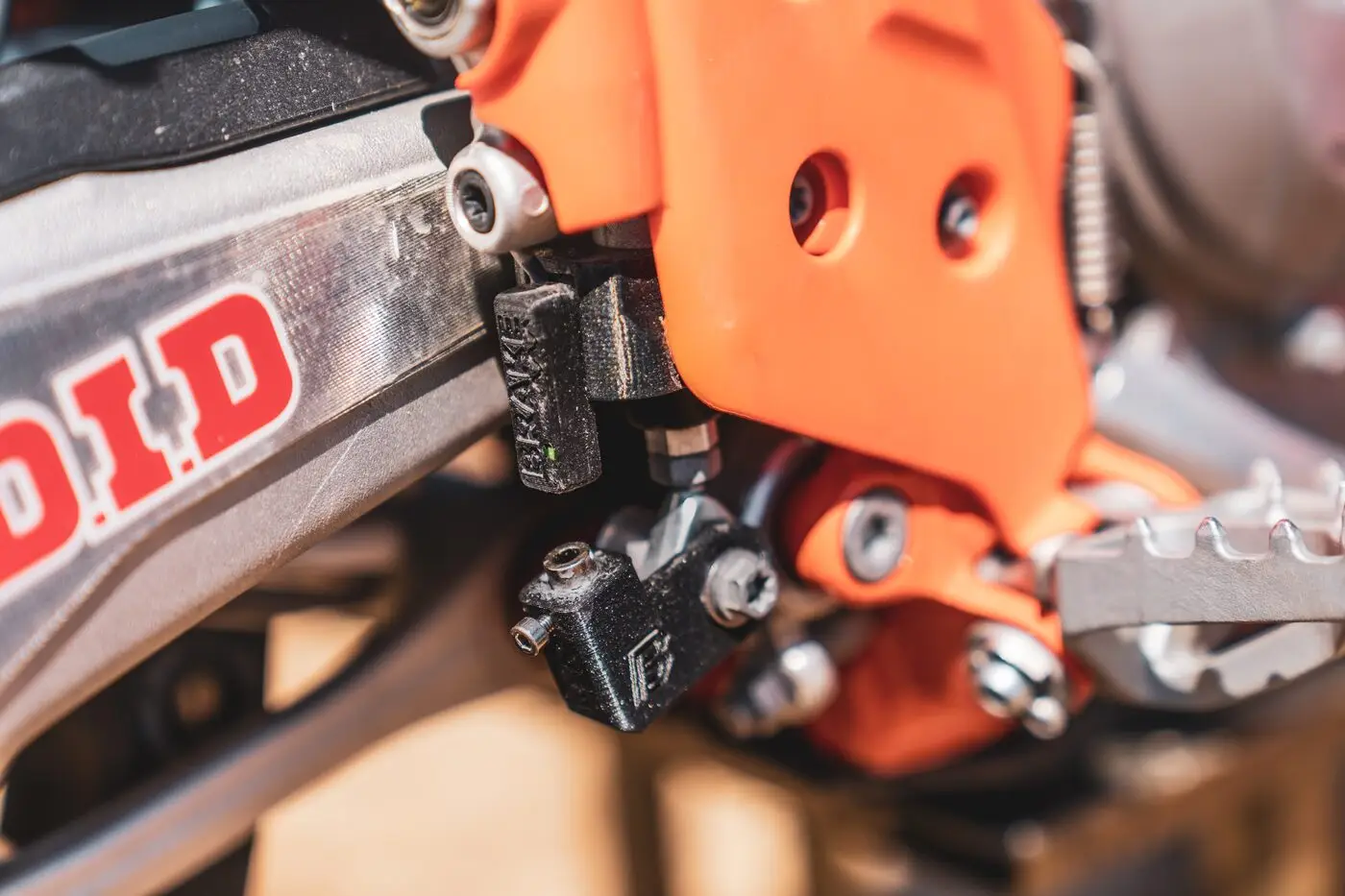
At the rear brake, and it goes on without bleeding the line — the same for the analog sensor and the on/off one. Speed sensor
On Telemetry V3 Pro, it reads real wheel speed at the wheel and updates faster than a GPS fix can. Fit one at the rear as well and the data shows the wheel locking under braking.
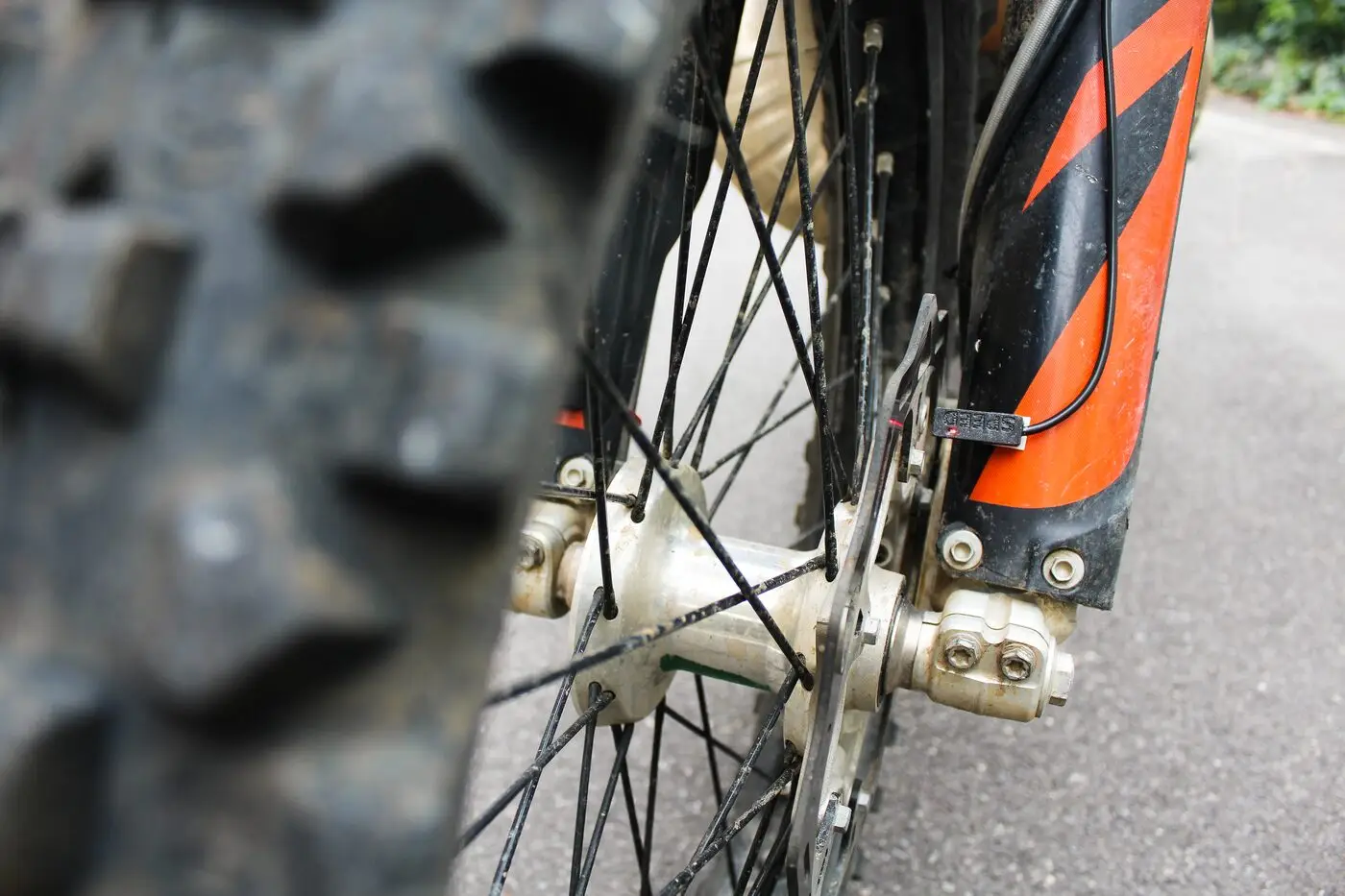
On the fork guard, reading the front wheel directly rather than waiting for a GPS fix.
What you'll actually look at
Fork and shock open on one time axis, so a hit at the front and what the rear did about it are read together instead of one after the other. Mac and Windows for the analysis, iOS and Android in the pits for pulling a lap off the bike between motos.
Someone near you can fit it
+189 trained BYB Points across 37 countries can fit it, set it up, and read the data with you.
You can own a Telemetry without ever visiting one. You want one for the first install, or the day a setup question is worth an hour with somebody who reads this data every week.
FAQ
Questions about motorcycle data acquisition
- What sensor strokes do I need for a motocross bike?
- A 350 mm sensor on the fork and a 150 mm sensor at the shock. A linear sensor measures any displacement up to its stroke length, so those two cover full-travel motocross and enduro and everything shorter. Other lengths are made on request — a road bike is usually 150 mm at the fork and 80 mm at the shock.
- Does it fit a road motorcycle as well as a motocross bike?
- Yes. BYB Telemetry V3 and V3 Pro are used on road motorcycles, motocross, speedway, enduro, supermoto and more. The mounts are the same; a road bike uses less of the sensor's stroke, or a shorter sensor made for it.
- Do I need the Telemetry V3 Pro for moto, or is the V3 enough?
- Both fit a motorcycle and both record the suspension. The V3 Pro samples at 1000 Hz where the V3 samples at 500 Hz, and it carries five sensor connectors against two — which is what makes room for the remote 100 g and 200 g accelerometers, the wired trigger, brake sensors, speed sensors and more.
- Can I fit the brake sensor without opening the hydraulic circuit?
- Yes. The brake sensor fits at the brake without breaking the line, so nothing has to be bled after fitting it.
- My shock mount is not a plain eyelet. Will the standard bracket work?
- The standard mounts cover most bikes, models and suspension units. Where they do not, the mount library is free and 3D printable — browse it for one that fits, or have a custom mount designed. There is always a way to fit the sensors.
Ride the lap, then read it
Record a lap and see what your suspension actually did with it.