How to measure sag on a mountain bike
Sag is how far the suspension compresses under the rider alone. Measure it by zeroing the fork or shock fully extended, sitting on the bike in riding kit and position, then dividing the compression by the total stroke. Fork and rear sag sit between 15% and 30% depending on the discipline; dynamic sag is where it sits while riding.
Published
What static sag and dynamic sag are
- Static sag
- The share of its travel a fork or shock uses with the rider sitting still on the bike in riding position. It is the number you set with air pressure or spring preload.
- Dynamic sag
- Where the suspension sits while the bike is being ridden, read from a recording. It only exists in motion, so it is measured with position sensors rather than a ruler.
| Compared on | Static sag | Dynamic sag |
|---|---|---|
| When | Bike still, rider on board | While riding |
| Measured with | O-ring and ruler, or a live sensor reading | Position sensors and a recorded run |
| Adjusted with | Air pressure or spring | Spring first, then damping |
| Typical range | 15–30% at fork and shock, by discipline | Compared with the static figure |
Motocross uses the words differently. There, static sag is the bike under its own weight and race sag is with the rider on board, as the motocross and enduro suspension setup guide explains.
How to measure static sag with an o-ring
- Set the starting air pressure from the manufacturer's chart and open any lockout or climb switch
- With no rider on the bike, push the o-ring against the seal or note the exposed stanchion or shaft
- Get on in riding kit: seated for mild trail riding, standing in the attack position for enduro and downhill
- Step off gently without pushing the suspension deeper, and measure how far the o-ring moved
- Divide that distance by the total stroke: 15 mm on a 60 mm shock stroke is 25%
- Add or remove air in small steps, RockShox uses 5 PSI, until the figure sits in range
Measure the rear shock against its own stroke, not the bike's wheel travel. On most frames the leverage ratio changes through the travel, so the same compression gives a different percentage at the wheel than at the shock.
How to read sag live with a sensor
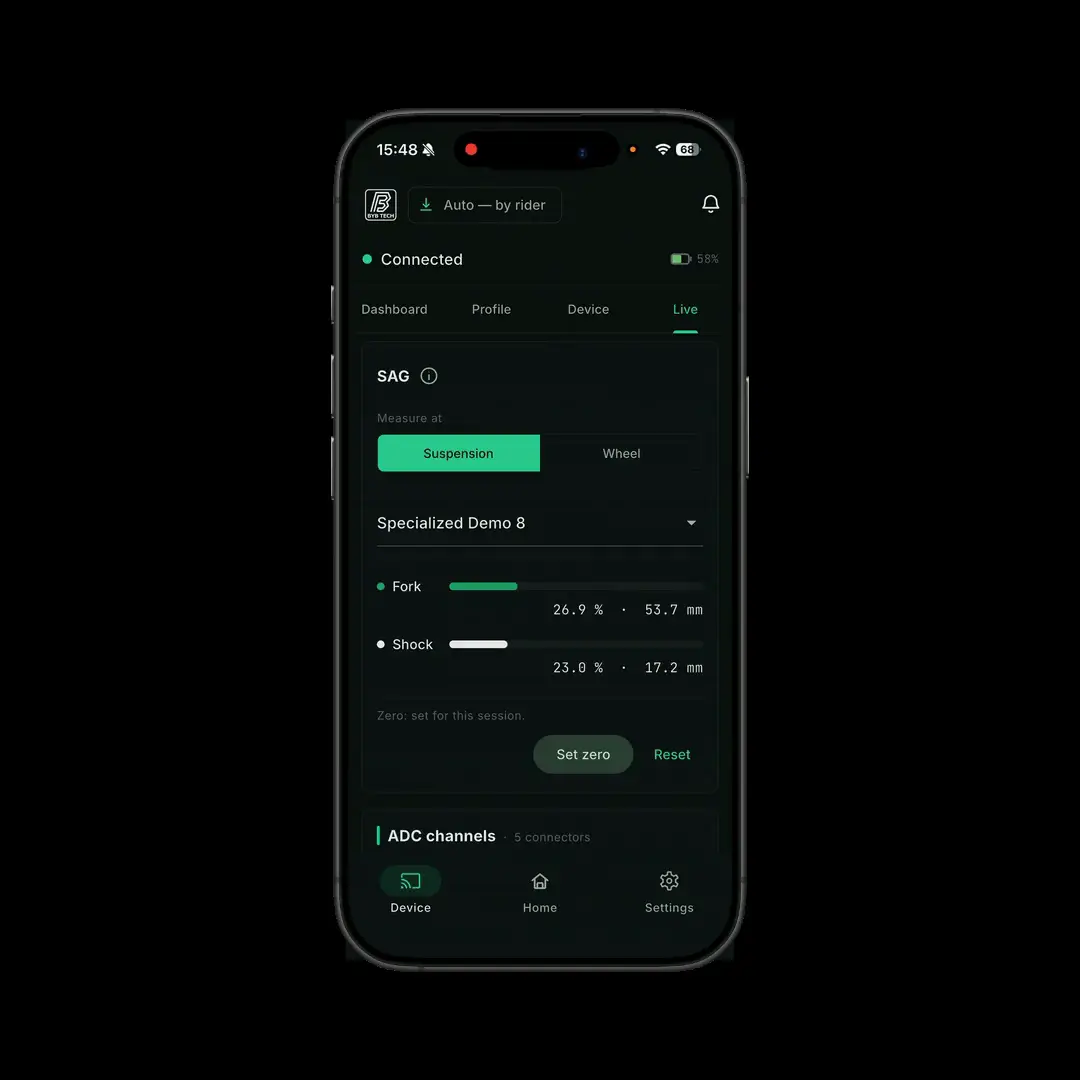
Telemetry V3 Pro adds a live SAG view to the BYB Telemetry app. Zero the suspension fully extended with no rider, sit in your riding position, and the app reads fork and shock sag in percent and millimetres as you settle.
The zero is never sent to the unit or saved in a run, so it cannot shift a recording. Switch from suspension to wheel and the app converts the reading through the leverage curve on the bike's setup sheet.
How to measure dynamic sag from a recorded run
Dynamic sag is read from the position distribution of a run: the share of time the fork and shock spent at each point of their travel. The middle of that distribution is where the bike actually rode.
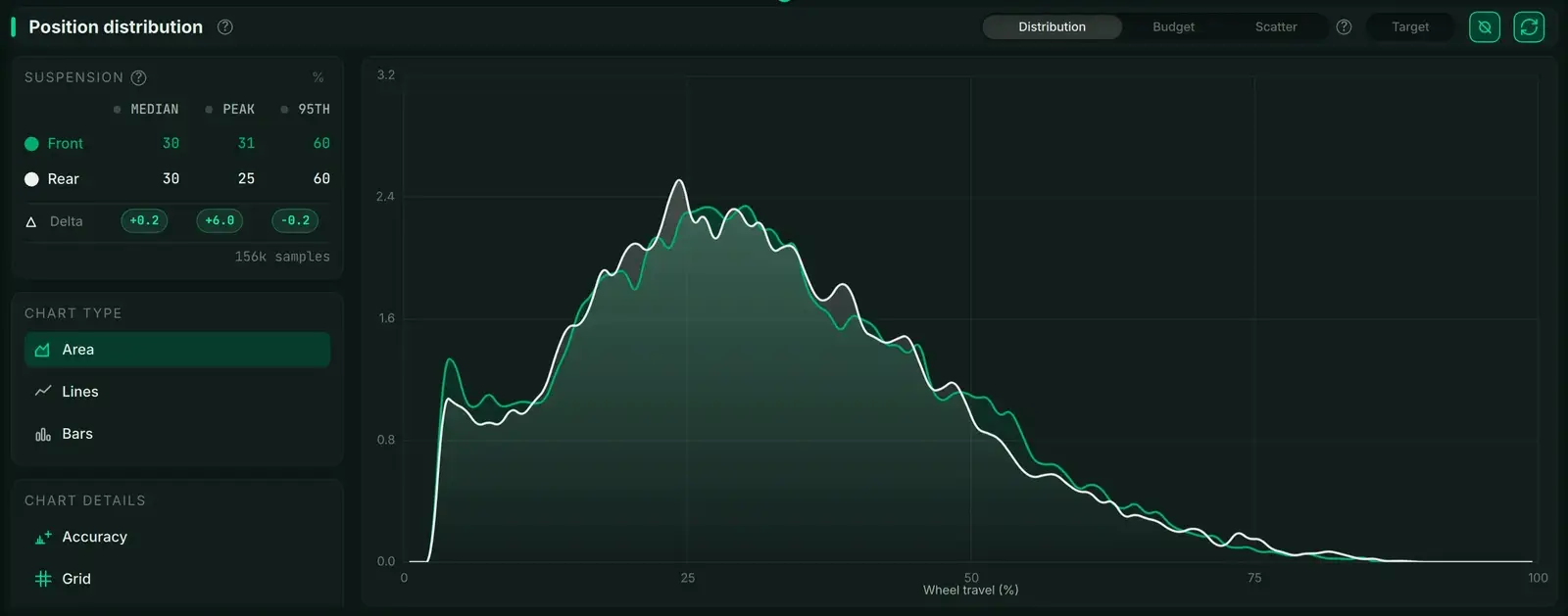
On a descent at Livigno on 18 July 2026, Telemetry V3 Pro recorded 8,212 positions in 8.2 seconds. Leaving out the moments the wheels were off the ground, the fork's median sat at 28% of its stroke and the shock's at 33%.
Eight seconds shows the method, not a verdict on that bike. Read dynamic sag over a full run, compare it with the static figure on the same setup, and read the shape around it with the guide to the travel histogram.
What to change when sag is out of range
- Too little sag: remove air in 5 PSI steps, or fit a softer coil spring
- Too much sag: add air in the same steps, or fit a stiffer coil spring
- One end in range and the other out: set each end on its own, because the two springs are independent
- After a change of 5–10 PSI: recheck rebound, which RockShox suggests moving 1–2 clicks
For coil shocks, the BYB Telemetry software has a spring calculator that estimates a spring rate from the rider, the suspension dimensions, preload and the sag you want. Treat the result as an estimate and confirm the installed sag on the bike.
Common questions
- What is the difference between static and dynamic sag?
- Static sag is measured with the rider sitting still on the bike; dynamic sag is where the suspension sits while riding, read from a recording. The first sets the spring, the second shows whether that setting holds on the trail.
- Should I measure sag seated or standing?
- Seated for trail riding, standing in the attack position for enduro and downhill. Choose the position you ride in most and use the same one every time, or the numbers cannot be compared.
- Is rear sag a percentage of shock stroke or wheel travel?
- Of shock stroke. The frame's leverage ratio changes through the travel on most bikes, so the same compression can give a different percentage at the wheel than at the shock.
- Can I measure sag without an o-ring?
- Yes. Telemetry V3 Pro reads fork and shock sag live in the BYB Telemetry app, in percent and millimetres, after a zero taken fully extended.