How to set up e-MTB suspension
Set up e-MTB suspension with the same method as any mountain bike, sag first, then rebound, then compression, but take pressures from the e-MTB's own chart: the motor and battery are part of what the springs carry. One example: Mondraker's 2026 guide for its Crafty e-MTB asks for 20% fork sag and 30–35% at the shock.
Published
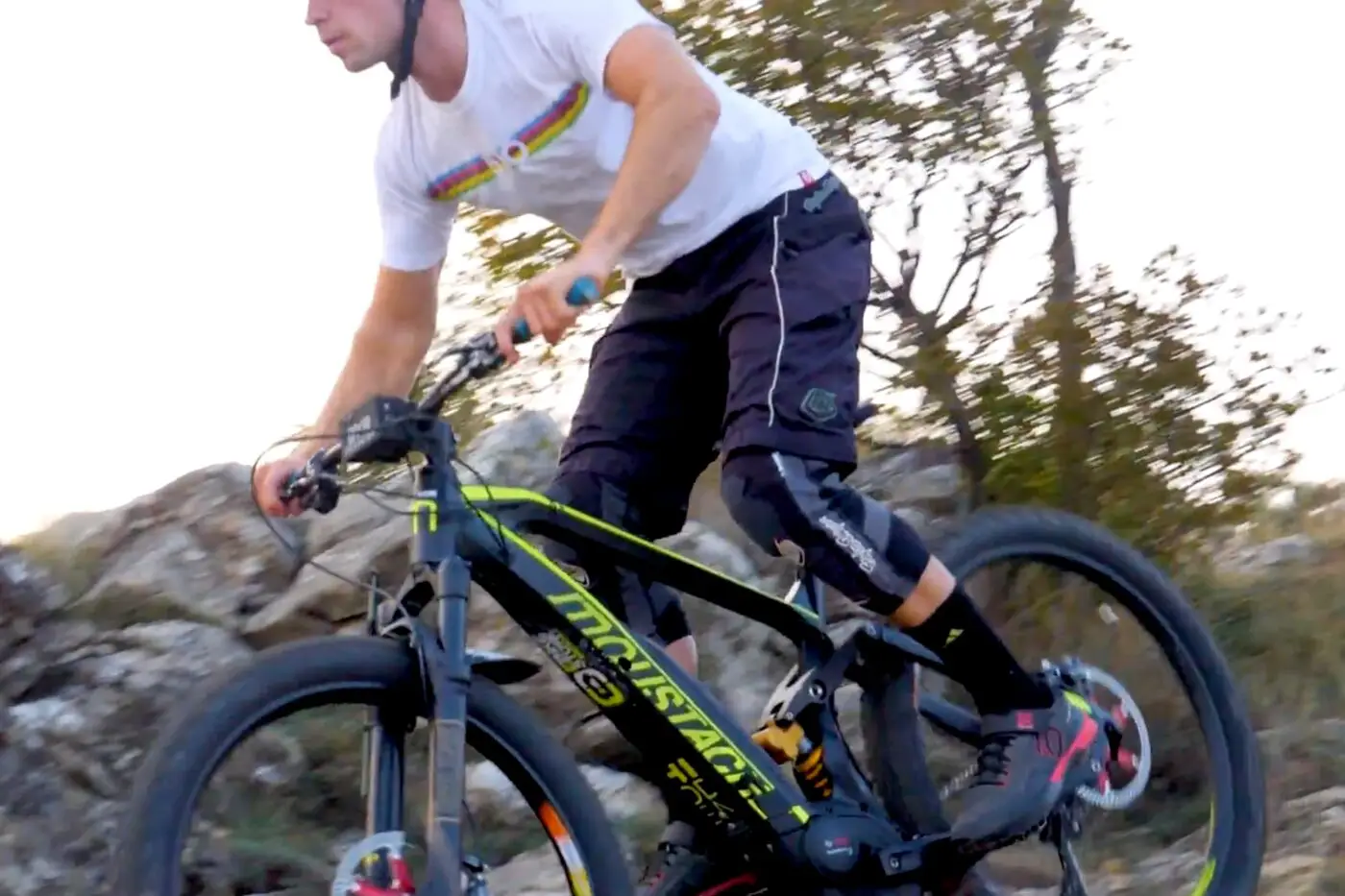
What is different about e-MTB suspension
The method is the same; the load is not. The motor and battery sit in the frame, so the springs carry them as well as the rider, and an e-MTB's setup chart is written for that bike rather than borrowed from a lighter one.
Sag measured with the rider on board already includes the bike's weight. That is why the procedure does not change: whatever the bike weighs, the o-ring or the sensor reads where the suspension actually sits.
Starting values from an e-MTB setup chart
Example
Mondraker Crafty Carbon S 2026
| Rider weight | Fork pressure | Fork rebound | Shock pressure | Shock rebound |
|---|---|---|---|---|
| 71–74 kg | 57 psi | 8 clicks | 180 psi | 6 clicks |
| 75–78 kg | 62 psi | 7 clicks | 190 psi | 6 clicks |
| 79–82 kg | 67 psi | 6 clicks | 200 psi | 5 clicks |
Each 4 kg band of rider weight adds 5 psi at the fork and 10 psi at the shock in that chart, with low-speed compression open. Mondraker calls the figures a general recommendation and the damping a personal choice, to fine-tune for riding style and terrain.
Its shock sag runs deeper than usual. Mountain bike sag usually sits between 15% and 30% of travel, depending on the discipline; this e-MTB enduro chart asks for 30–35% at the shock.
How to set up e-MTB suspension step by step
- Find the chart for your bike and fork, and weigh yourself in riding kit
- Set the air pressure for that weight, then measure sag: 20% at the fork and 30–35% at the shock on Mondraker's e-MTB enduro chart
- Set rebound in clicks out from fully closed, from the same chart
- Set low-speed compression where the chart puts it for your weight
- Ride the same test section each time and change one setting by one step
The order of the steps and the step sizes are the ones in how to set up mountain bike suspension.
Recording an e-MTB's suspension
Installing BYB Telemetry on an e-MTB is identical to any mountain bike: the same sensors on fork and shock, typically fitted in under 15 minutes. The reading is the same too: dynamic sag, travel used and the balance between the two ends.
That makes a recording the check on the chart. If the shock sits at 30–35% in the car park but deeper on the trail, the run shows it, and the travel histogram shows where.
Common questions
- Do e-MTBs need more air pressure?
- Use the pressure the bike's own chart gives for the rider's weight, not a chart written for another bike. On Mondraker's 2026 Crafty chart, a 75–78 kg rider runs 62 psi in the fork and 190 psi in the shock.
- How much sag should an e-MTB have?
- Mondraker's 2026 Crafty Carbon S guide suggests 20% at the fork and 30–35% at the shock for enduro use. More generally, fork and rear sag sit between 15% and 30% of travel, depending on the discipline.
- Is installing data acquisition on an e-MTB different?
- No. The install is identical to any mountain bike, with the same sensors on fork and shock.