What is data acquisition in mountain biking?
Data acquisition is the recording of physical signals as timestamped measurements. On a mountain bike that means sensors on the fork and shock logging position up to a thousand times a second, so a change to spring rate or damping can be judged against a number rather than against the memory of a run.
Published
What data acquisition means on a mountain bike
- Data acquisition
- Recording physical signals — position, speed, acceleration — as timestamped measurements that can be replayed and compared after the ride.
The practice comes from motorsport. On a mountain bike the signals that matter are suspension position, wheel speed, satellite position and acceleration, and Telemetry V3 and V3 Pro record them together on one clock.
The value is objectivity, not replacement. Two riders describe the same run differently and the same rider describes it differently on a second lap; the measurement does not change. Rider feedback still says what to fix, and the data says whether the fix worked.
How a run is recorded and read back
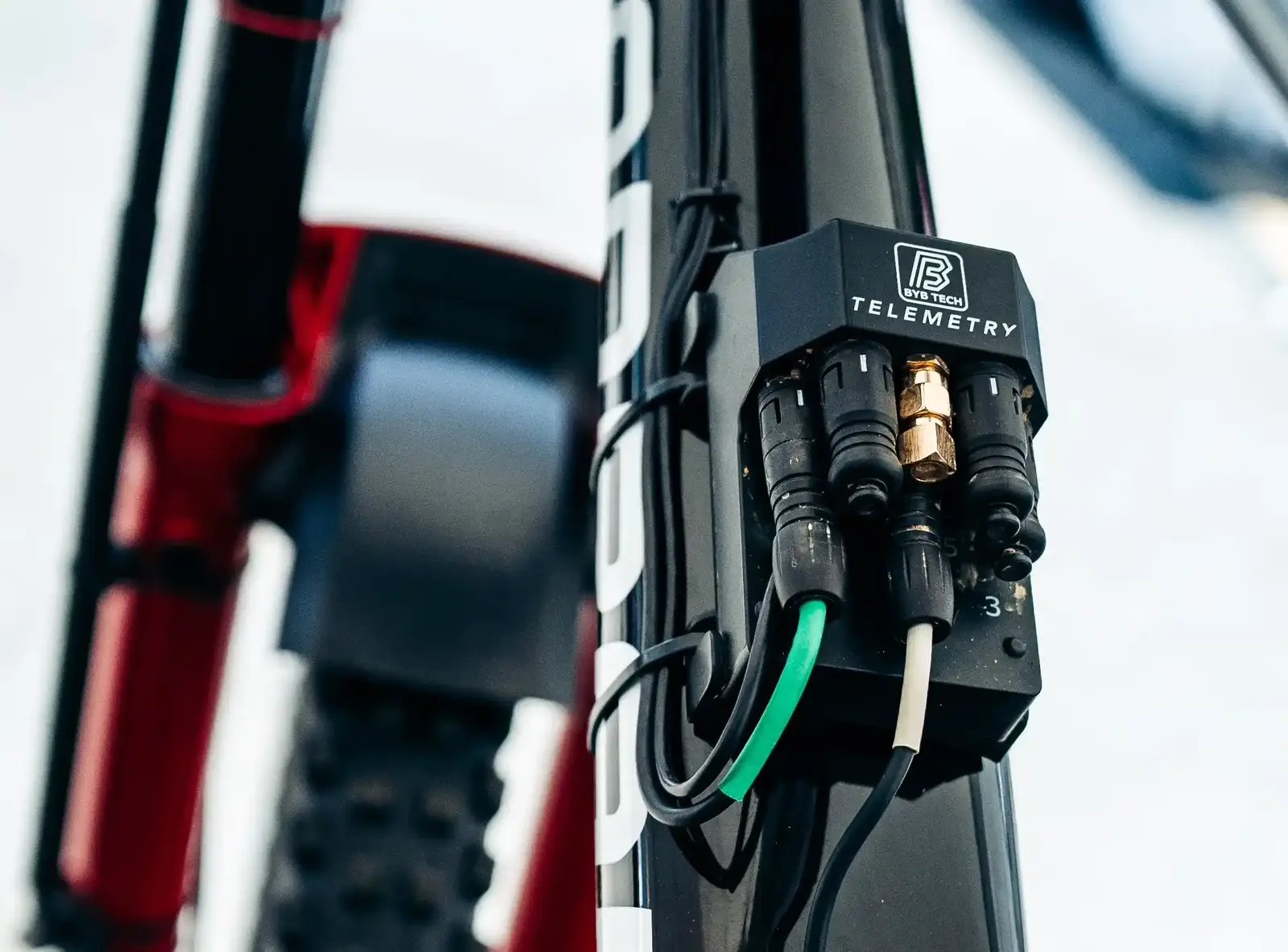
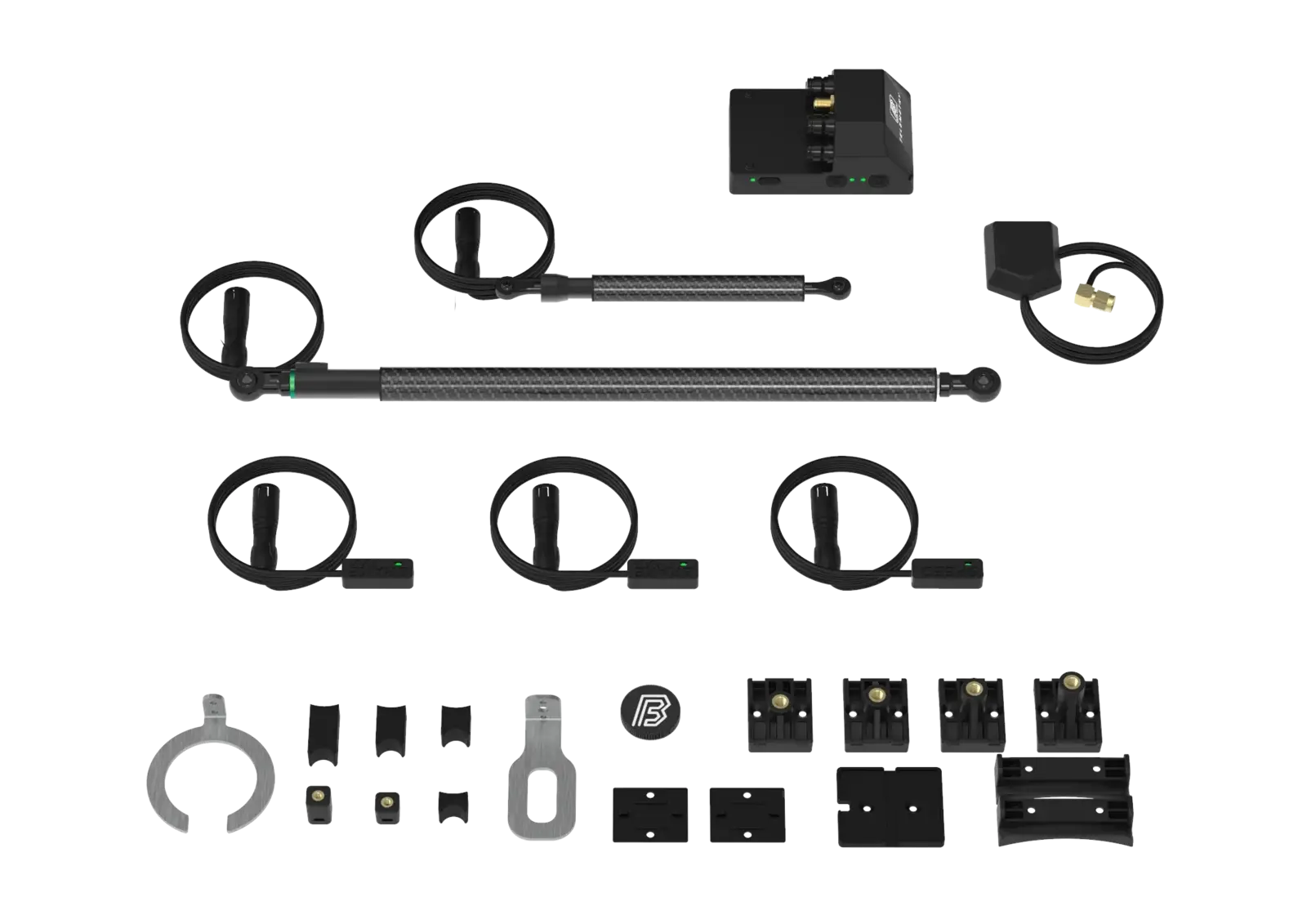
Linear sensors clamp to the fork and to the rear shock and measure shaft position directly. The acquisition unit timestamps every channel against its own inertial sensors and a GPS fix, so a bump in the fork trace and the point on the trail where it happened are the same instant.
- Fork position, from a 210 mm linear sensor
- Shock position, from an 80 mm linear sensor
- Wheel speed, from a dedicated sensor
- Front and rear brake, from two digital sensors
- Acceleration and rotation, from a built-in 6-axis IMU
- Position and speed, from a built-in 25 Hz GPS
That list is the Telemetry V3 Pro MTB kit. Shaft movement becomes wheel travel through the frame's leverage ratio, which the software and app apply once the frame is known.
What the data tells you about a setup
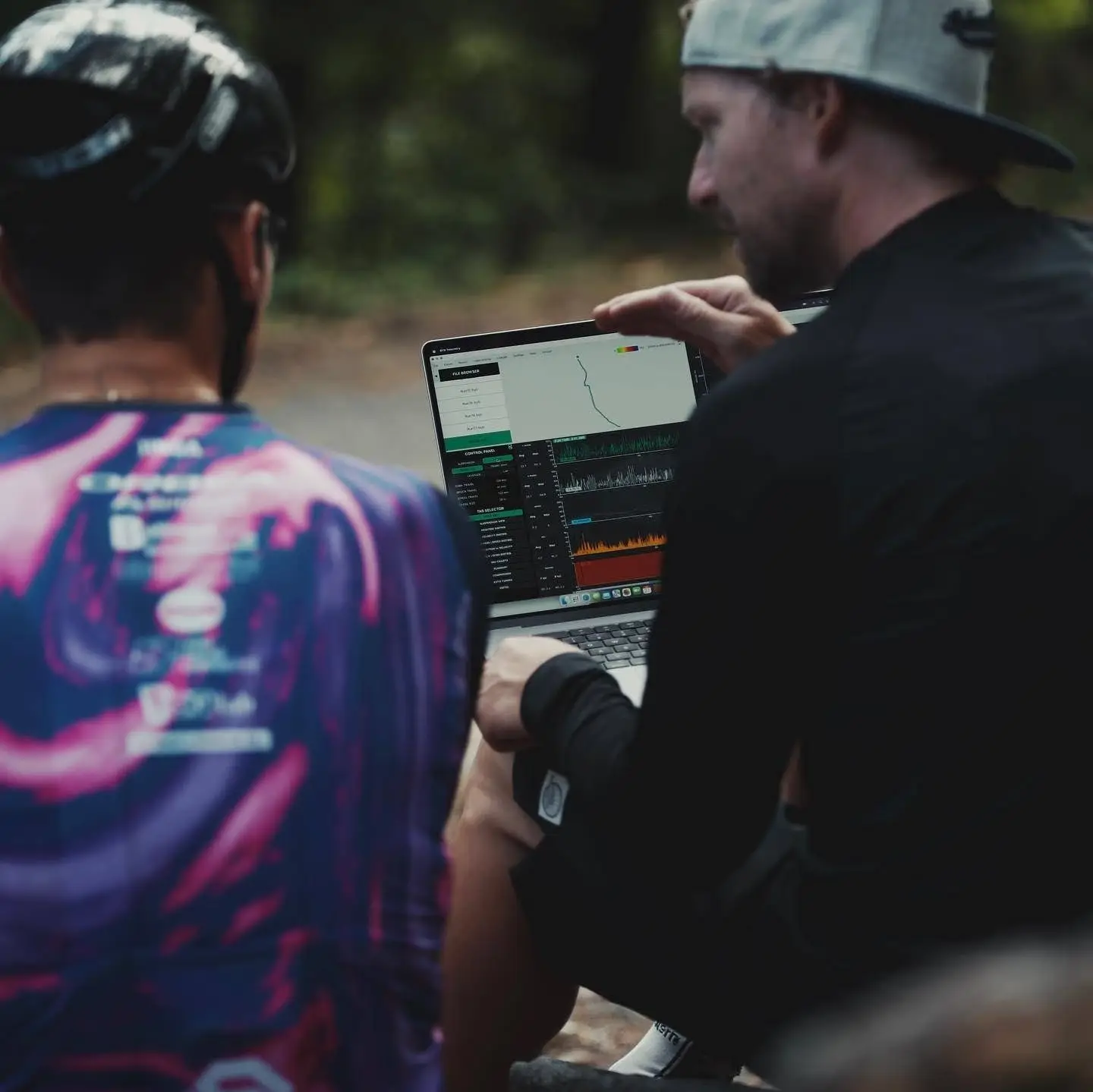
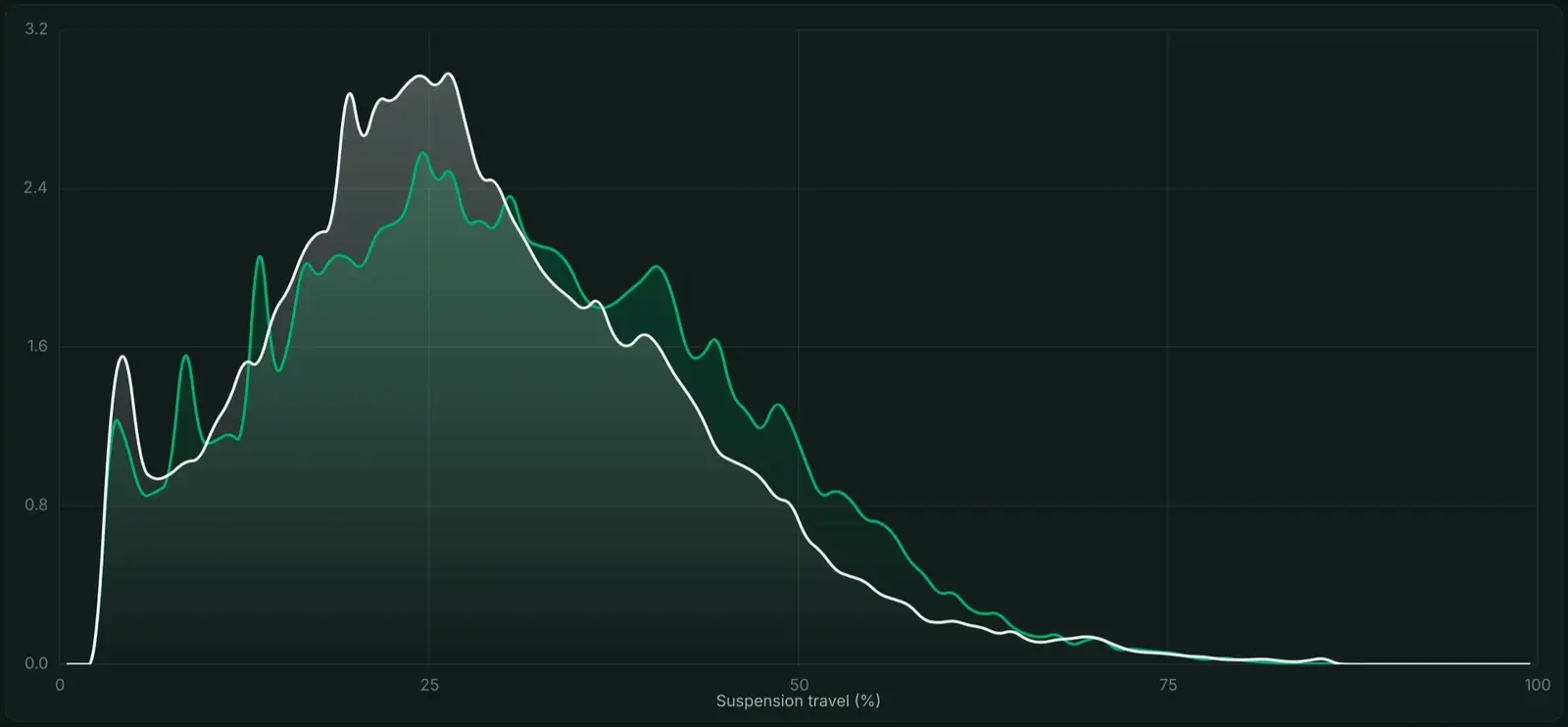
The first chart most riders read is the position distribution: how much of the run the suspension spent at each point in its stroke. Its shape says whether the spring is carrying the rider where it should, and how to read a travel histogram is a guide of its own.
Velocity separates a spring problem from a damping one. Position says where the suspension sat; the speed at which it moved says whether a harsh landing came from a rate that was too high or from rebound that could not keep up.
Telemetry V3 and Telemetry V3 Pro compared
| Specification | Telemetry V3 | Telemetry V3 Pro |
|---|---|---|
| Sensor connectors | 2 | 5 |
| Sampling rate | 500 Hz | 1000 Hz |
| What it can record | Suspension | Suspension, brakes, pressure, remote accelerometers at the axles, a wired trigger to mark the track, and custom sensors |
| Built-in IMU (3-axis ±16 g, 3-axis ±1000 °/s) | Yes | Yes |
| Vehicle modes | MTB, Moto | MTB, Moto, Quad, Car, plus OPEN (custom non-BYB sensors) |
| Software and app | Included, with limited features | Included, every feature |
| BLE sensors (heart rate, power, cadence) | No | Yes |
| Custom channel mapping | No | Yes |
| Raw data export | No | Yes |
| Auto pause | Yes | Yes |
| Continuous sampling | +9h | +9h |
| Weight | 80 g · 2.8 oz | 80 g · 2.8 oz |
| Dimensions (with connectors) | 40×50×80 mm · 1.6×2.0×3.1 in | 40×50×80 mm · 1.6×2.0×3.1 in |
Both units share the inertial sensor and the GPS, and both run the same software. The difference a buyer is choosing between is how many sensors can be attached at once and how fast each one is sampled, and every current kit is listed in the store.
Common questions
- Do you need data acquisition to set up suspension?
- No, but it removes the guesswork. A sag chart gives a starting point; a recording says what the fork and shock actually did at 500 Hz or 1000 Hz, and whether the change you made moved anything.
- What is the difference between Telemetry V3 and Telemetry V3 Pro?
- Telemetry V3 has two sensor connectors and samples at 500 Hz, and it records suspension only. Telemetry V3 Pro has five connectors, samples at 1000 Hz, and takes brake, pressure and other sensors as well. Both carry the same 6-axis IMU and run the same software.
- Can data acquisition be used on any bike?
- The linear sensors fit standard forks and shocks, and the software converts shaft movement to wheel travel using the frame's leverage ratio. What varies between bikes is the mounting, and printable mounts exist for several frames.