How a suspension shop gets its clients' runs
A suspension shop gets its clients' runs automatically when each rider's BYB Telemetry app is set to send every new run to the shop. The tuner keeps one profile per client, and each run arrives with that rider's bike and setup attached, ready to compare with the last session.
Published
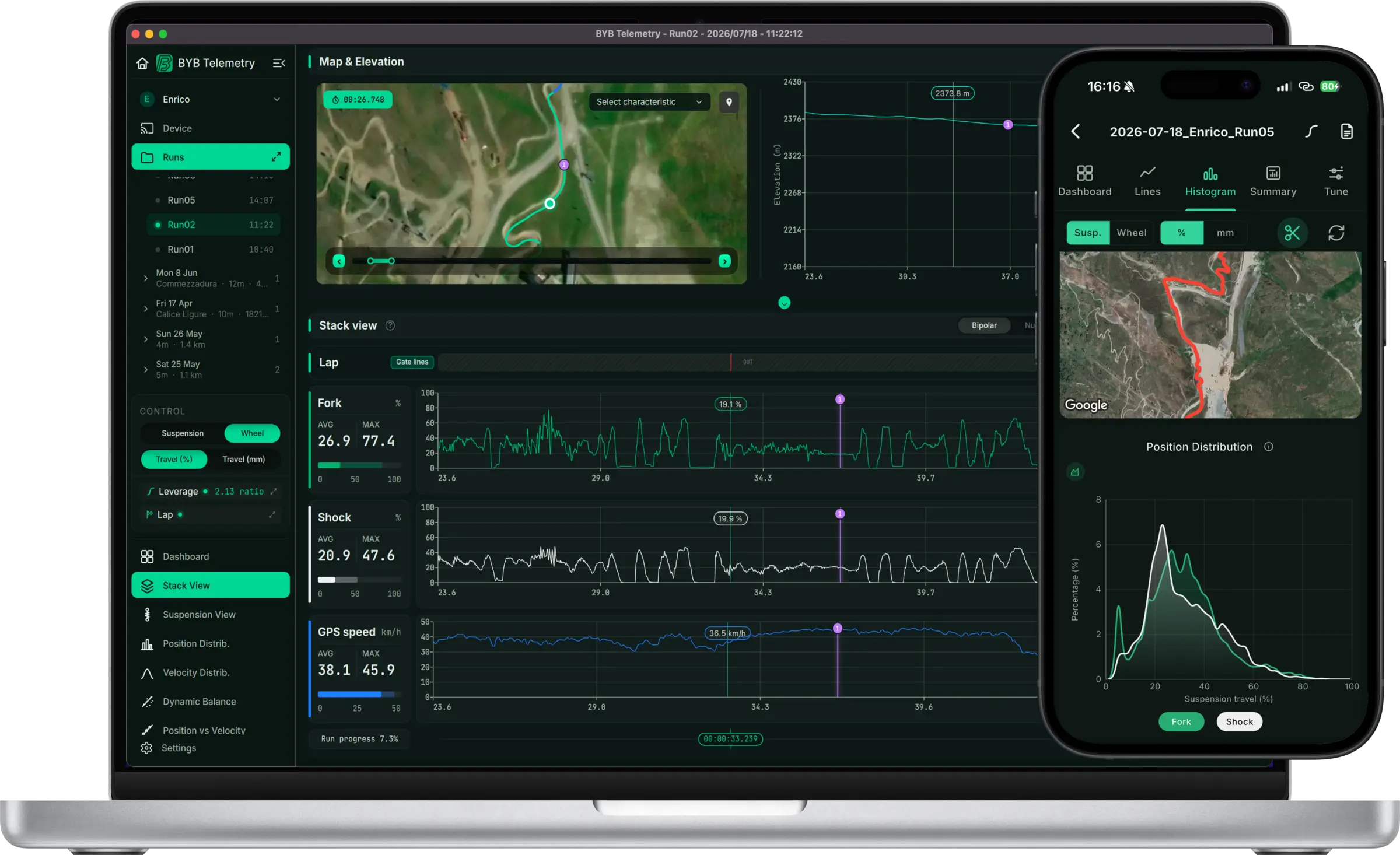
How runs travel from a rider to a suspension shop
- The rider records with Telemetry V3 or Telemetry V3 Pro and downloads the run in the BYB Telemetry app
- The run files itself under the setup in place when it started
- The app shares that run, or sends every new run automatically, to the shop
- The shop receives the run with the rider's bike and setup attached
- The tuner compares it with earlier runs and decides the next change
Runs are shared from the app on iOS and Android. The desktop software runs on macOS and Windows, and both are free, with no licence or subscription.
What the shop receives with each run
- Fork and shock position, recorded at 500 Hz on Telemetry V3 or 1000 Hz on Telemetry V3 Pro
- The setup the run was ridden on, from the rider's setup sheet
- The bike it was ridden on
Receiving runs needs a plan that includes it on the shop's side. How the rider's side of the log is kept is covered in how to keep a suspension setup log.
One profile per client in the Garage
In the Garage, a workshop keeps one profile per client, each with its bikes and their setup sheets. A client's history stays in one place across services and seasons, instead of in a mechanic's notebook.
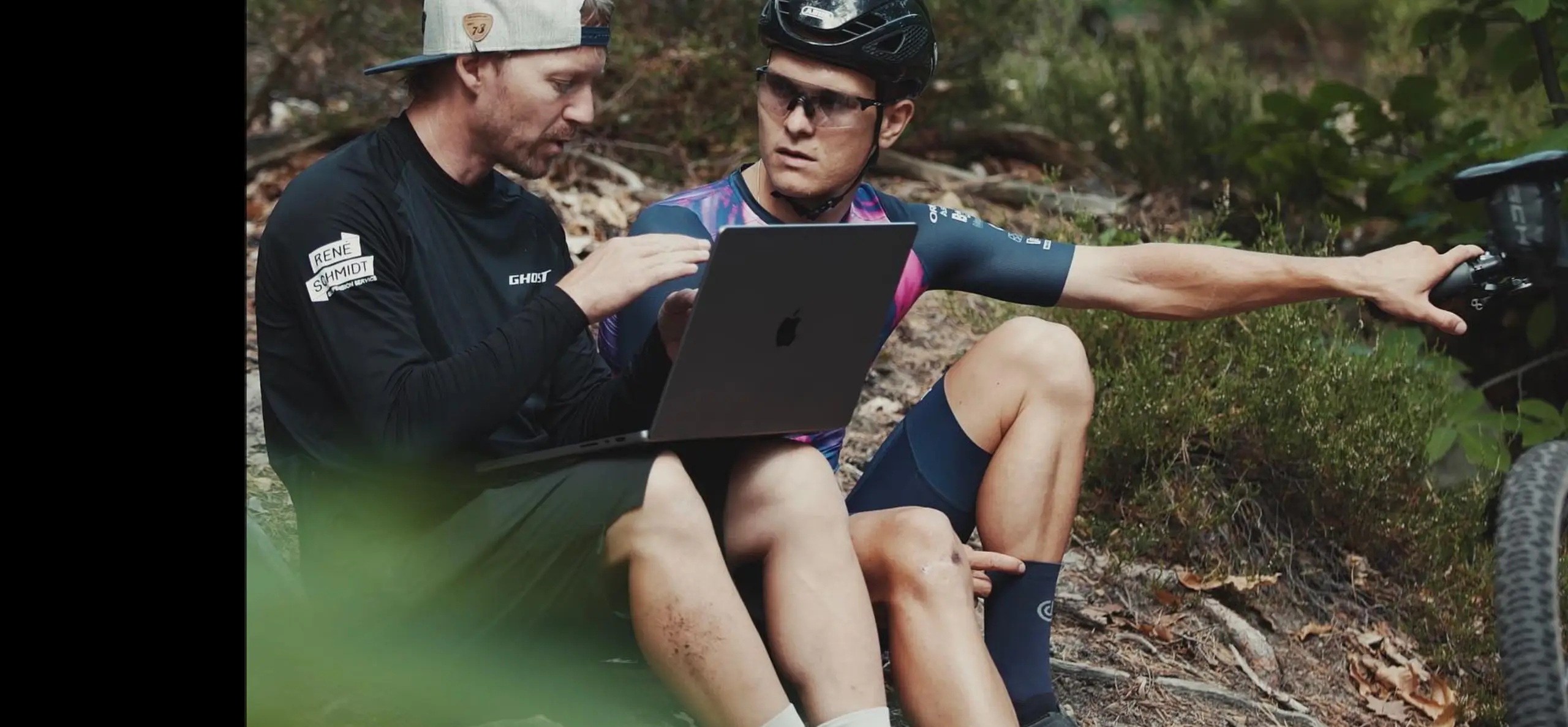
Why every run beats one session at the shop
A session at the shop shows a few runs on one day. Runs sent automatically show the setup across the rider's own trails and conditions, between visits, so the next change is based on more than one morning.
With the runs in, the tuner works in the same software the rider uses: compare runs, position and velocity distributions, and auto tuning, which proposes a direction for each adjuster. What those views show is covered in compression and rebound at high and low speed.
A BYB Point works the other way round: the workshop owns the hardware, keeps the recording, and the rider leaves with a saved baseline, as suspension tuning with data explains.
Common questions
- How does a suspension tuner get my runs?
- Share a run from the BYB Telemetry app, or set it to send every new run automatically. The tuner receives the setup and the bike with each one.
- Does the shop need its own plan?
- Yes. Receiving runs needs a plan that includes it on the tuner's side.
- Which devices can share runs?
- Run sharing is published for the app on iOS and Android. The desktop software runs on macOS and Windows, free with no licence or subscription.