

Suspension data acquisition
Suspension data acquisition
- V3 Pro sampling
- 1000 Hz
- Acquisition unit
- 80 g
- Typical install
- < 15 min
Suspension data acquisition measures how a suspension actually moves — up to 1000 times a second — and turns that motion into charts you can compare run to run.
BYB Telemetry records suspension travel, IMU data, brake input, wheel speed, GPS position and orientation on mountain bikes, motocross bikes, quads and cars, so a setup change becomes a measured difference instead of an opinion.
- Official World Cup teams use it
- +25
- BYB Points in +37 countries
- +189
- Publications have covered it
- 35
Who already runs it
More than 25 official World Cup teams record with BYB Telemetry, alongside privateers and smaller teams the count does not reach. These are just a few of them.








Why guessing fails
Modern suspension is powerful, and complex. Every setup change is a guess until something measures it.
You cannot feel one click
One click of compression is a small change. After a run, on different dirt, with tired legs, “it felt better” is not evidence that it was.
You cannot remember last season
The setup that worked at that track in winter or last summer is gone unless something wrote it down.
You cannot separate the rider/driver from the vehicle
A quicker run might be a better setup, or a better line. The recording tells you which.
You cannot hand over a feeling
A rider says the front is harsh. A technician needs to know where in the travel, and how fast — and that is a sentence no one can hand over.
What BYB Telemetry measures
More than six kinds of measurement, recorded together and time-aligned on every vehicle the platform fits, so every trace can be read against every other.
Suspension and wheel travel
Suspension position at every corner, for the whole run, in millimetres and as a percentage of the travel available.
Suspension and wheel speed and acceleration
How fast the suspension moves through its stroke, and how sharply that speed changes. It reaches 10000 mm/s on rough ground.
Brake sensors
Fitted without opening the hydraulic circuit. Digital records clean on-off timing; analog records how hard.
Speed sensors
Measured at the wheel rather than derived from GPS, which matters wherever the sky is not clear — under trees, in a valley, inside a car.
GPS and lap timing
Position for the run, so a trace can be read against the piece of ground that produced it.
Impact detection and orientation
A built-in IMU: 3-axis acceleration and 3-axis rotation. Impacts and landings show up here first. Remote accelerometers fit as extra sensors.
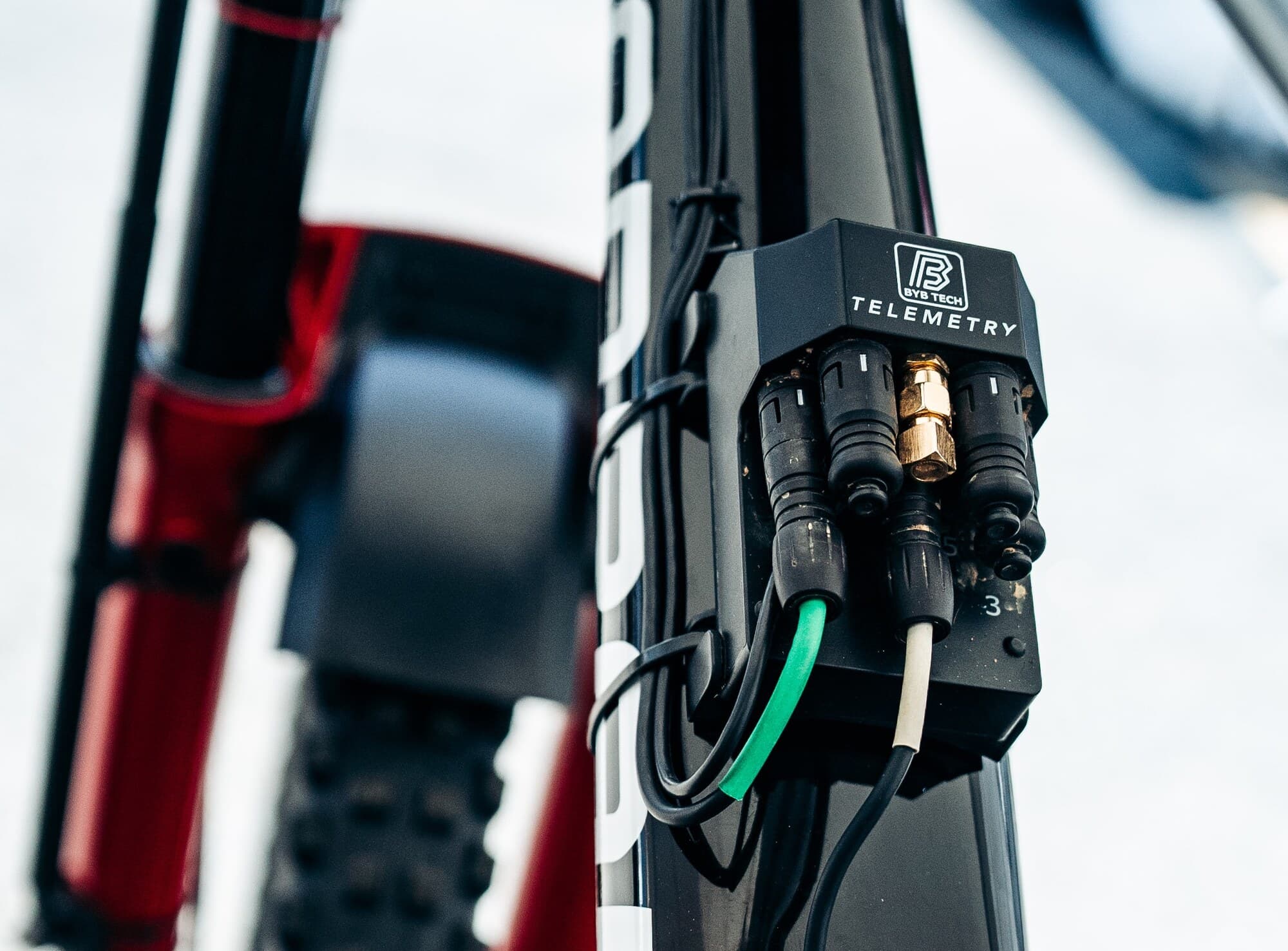
Why the sampling rate matters
Fast enough to catch the event, not just its average
Suspension hits 10000 mm/s on rough ground. That decides how often a sensor has to look.
A sensor reading 50 times a second waits 20 ms between looks. At peak speed the shaft covers 200 mm in that gap, so what comes back is the average of the event rather than the event.
Off-road is the demanding case, not the forgiving one. Rocks, roots and braking bumps ask for short violent movements — and the shorter the impact, the faster a sensor has to be to see it happen at all.
From install to answer
Fix it today, not over three weekends. A session is three steps, and only the first one takes any setting up.
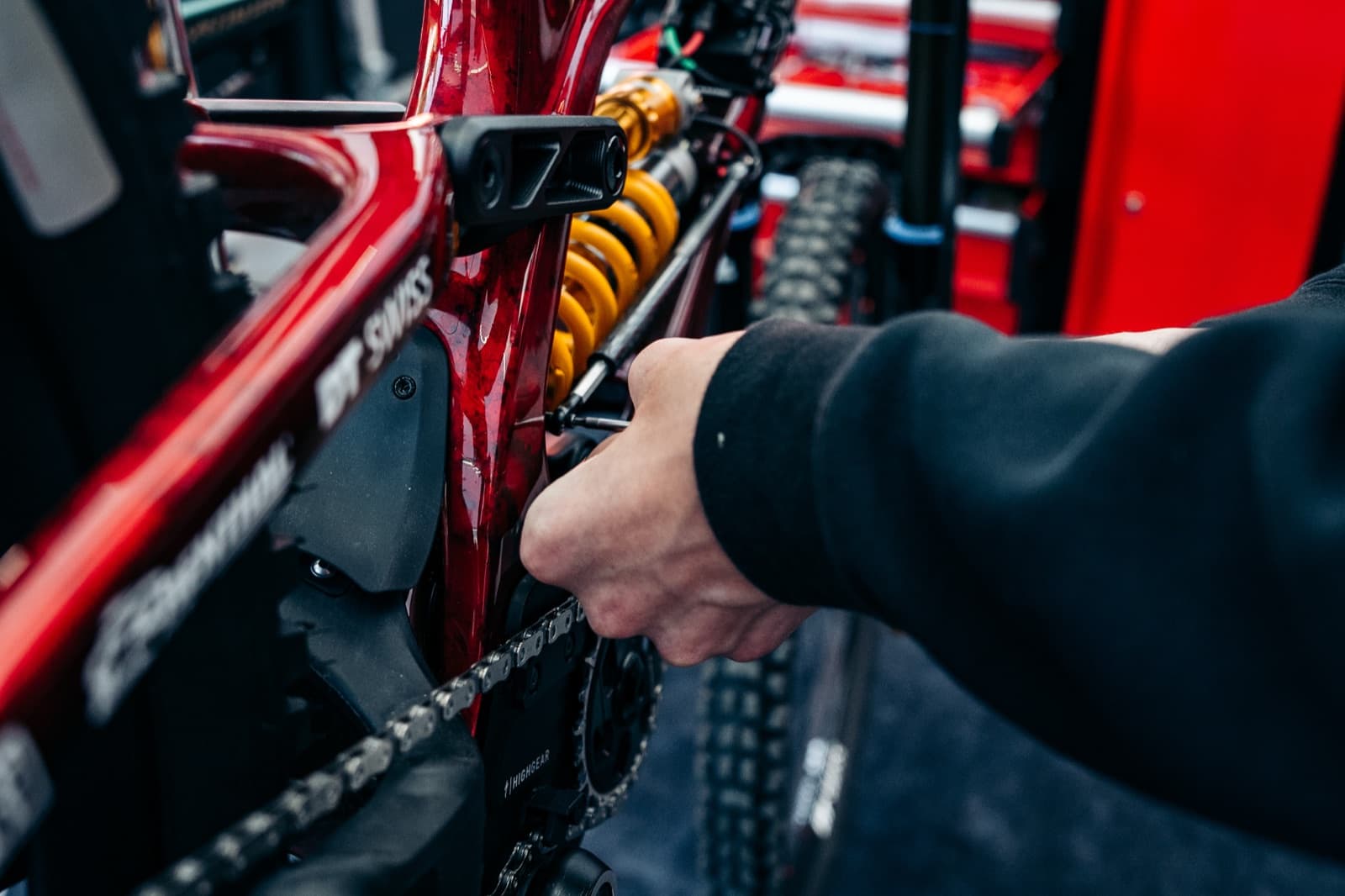
Install
The sensors and the acquisition unit go on with universal mounts — no bracket specific to your frame. Typically under 15 minutes, and quicker the second time.
Ride
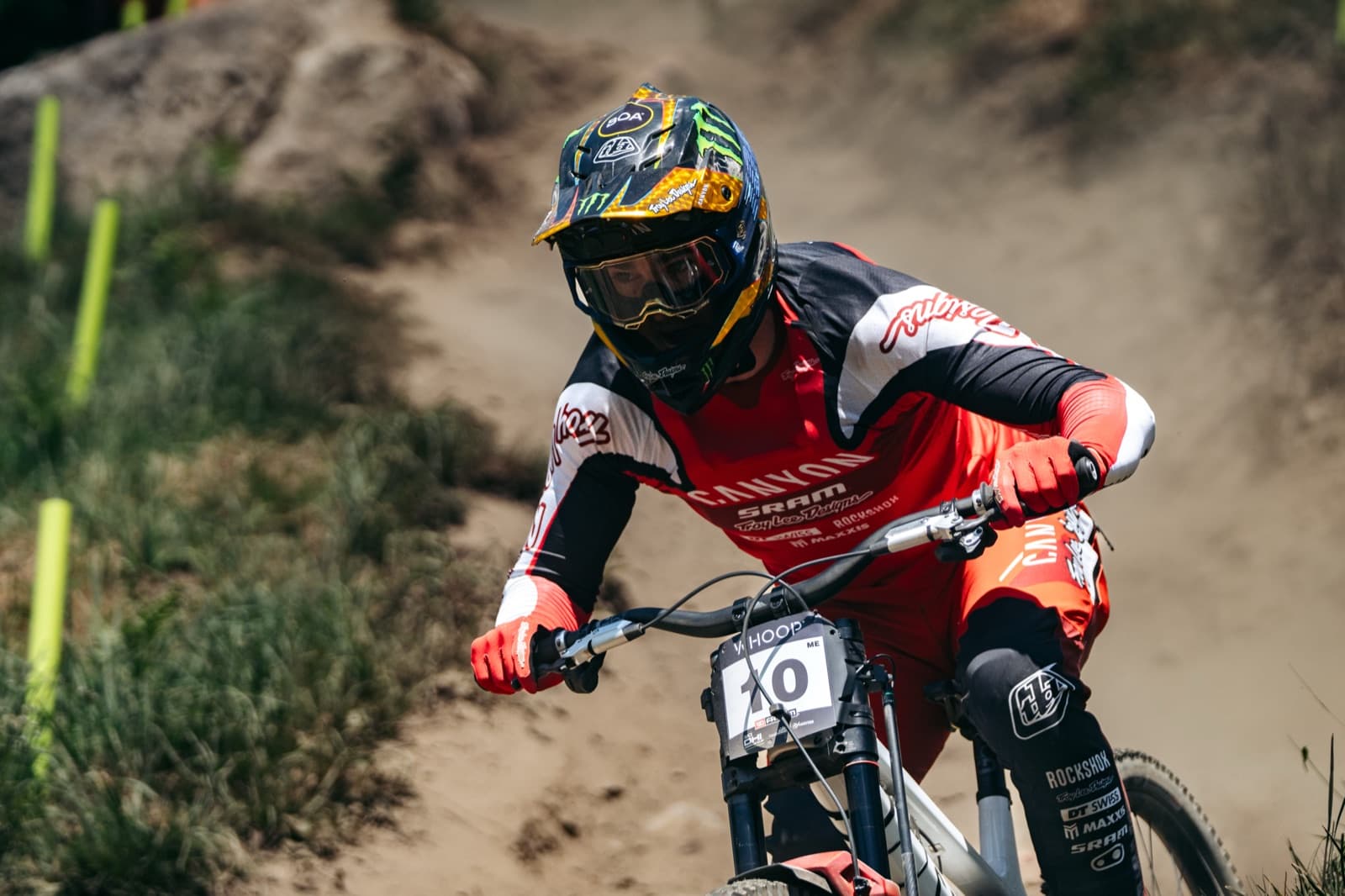
No calibration routine. The system zeroes itself while you ride, so you start recording and go.
Analyse
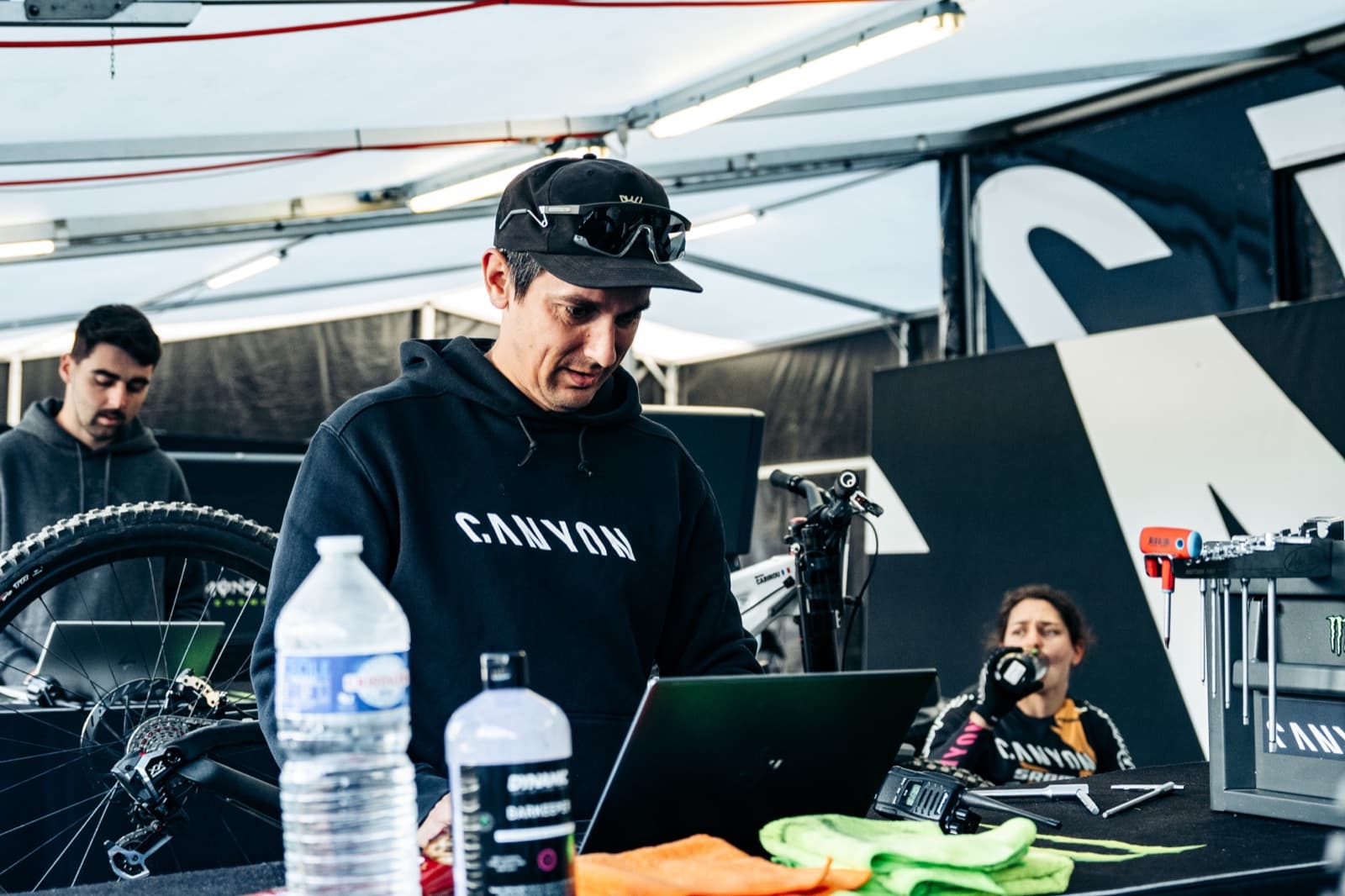
Pull the run onto a phone at the track or a laptop at home, and compare it with the one before. There is nothing to assemble before you can read it and decide the next change.
What a setup change looks like
Two runs of the same section on the same vehicle, one setting apart. Pick yours, then drag the divider to move between the runs.
- Front
- Rear
A density chart of fork and shock travel across two runs of the same trail, wiped between the run before a setup change and the run after it.
- Front
- Rear
A density chart of fork and shock travel across two runs of the same trail, wiped between the run before a setup change and the run after it.
- Front
- Rear
- Front right
A density chart of fork and shock travel across two runs of the same trail, wiped between the run before a setup change and the run after it.
- Front
- Rear
- Front right
- Rear right
A density chart of fork and shock travel across two runs of the same trail, wiped between the run before a setup change and the run after it.
What is in the kit
BYB Telemetry ships as a complete system: hardware, sensors, mounts, and both the desktop software (Mac and Windows) and the mobile app (iOS and Android).
- Acquisition unit, 80 g
- Suspension sensors
- Brake sensors
- Speed sensor
- GPS antenna
- Mounts and hardware
- Desktop software and mobile app
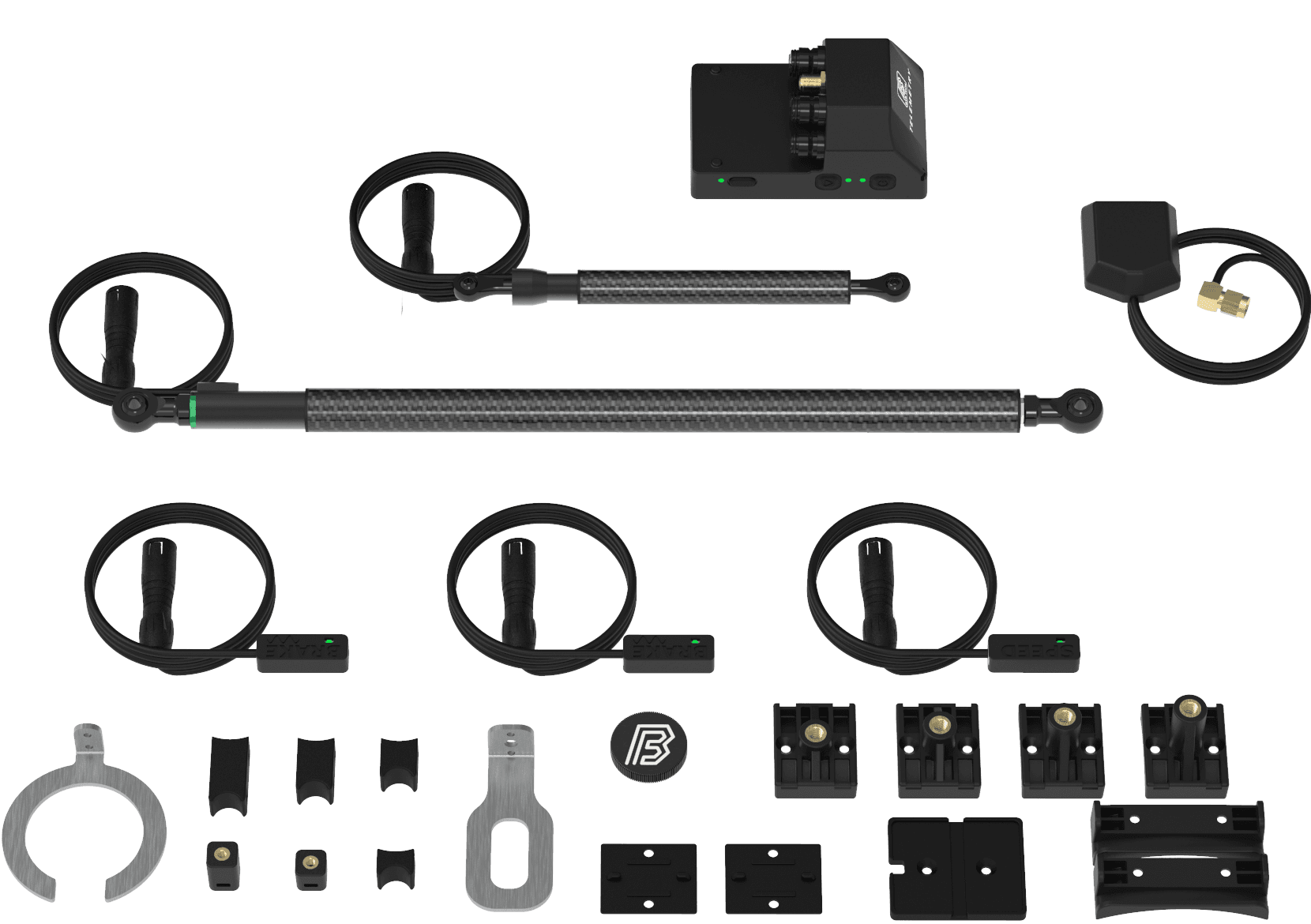
- Acquisition unit, 80 g
- Suspension sensors
- GPS antenna
- Mounts and hardware
- Desktop software and mobile app
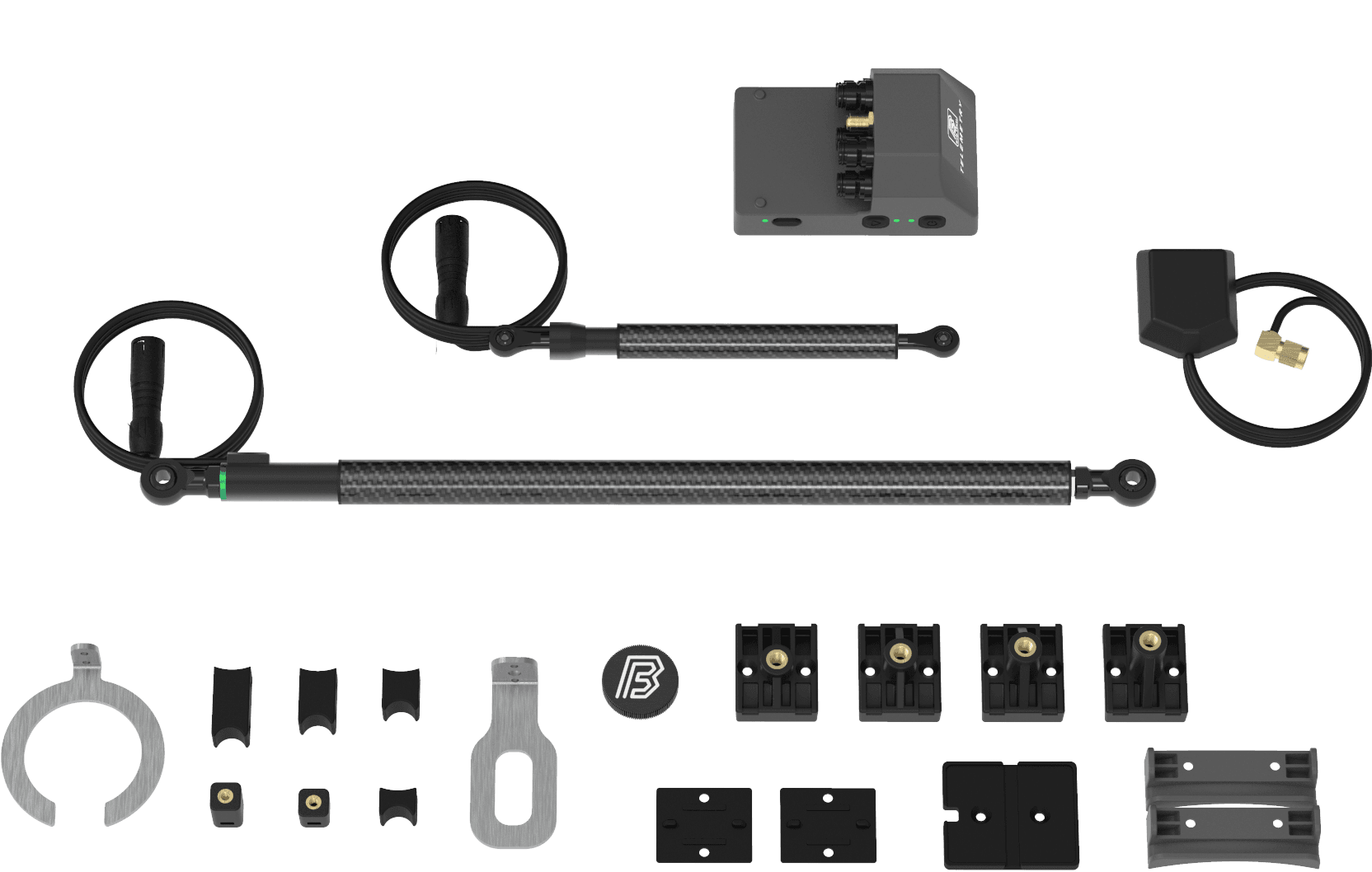
Telemetry V3, or V3 Pro?
Two units, the same high-precision sensors, and 8 measured differences between them.
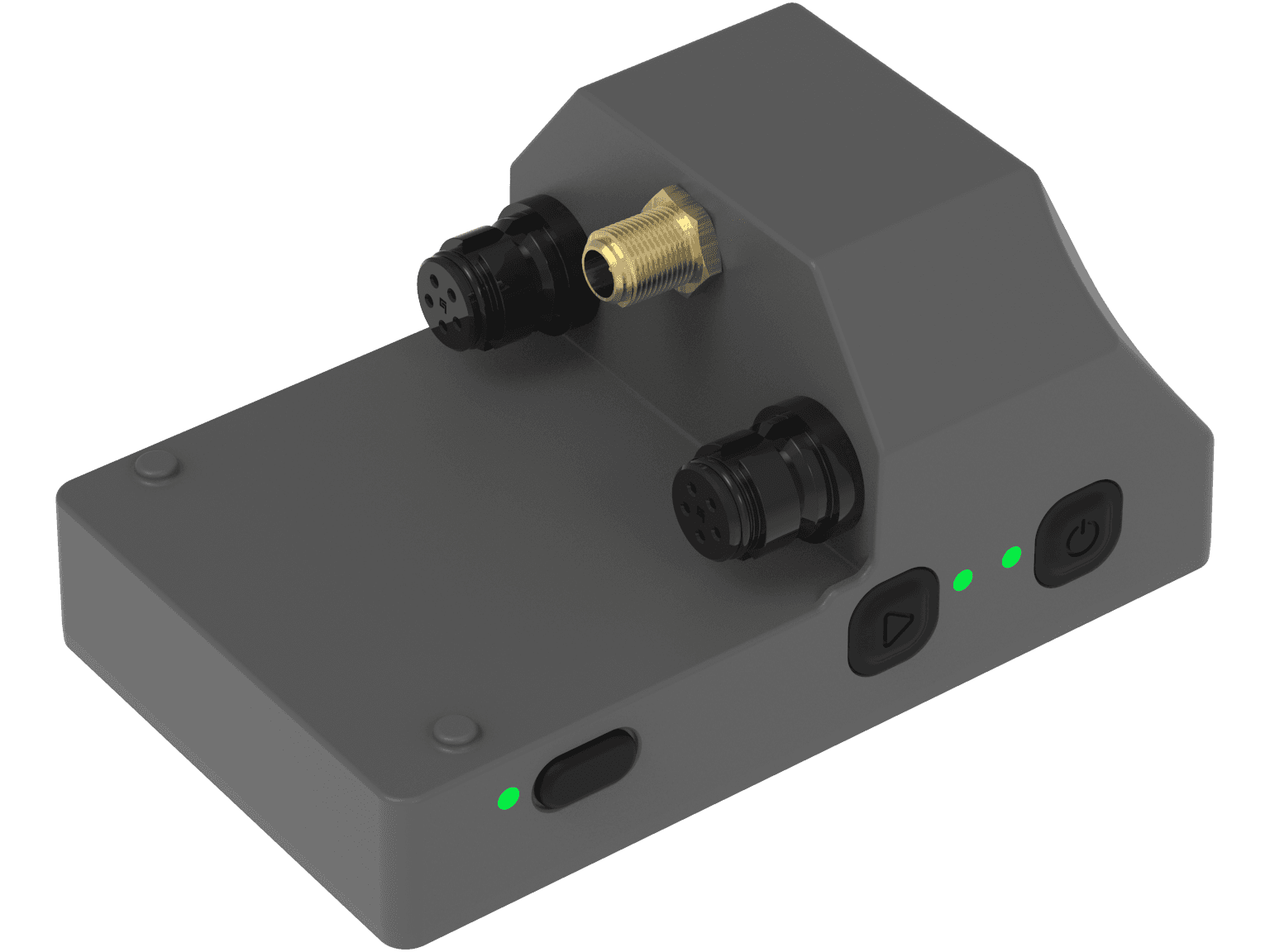
Telemetry V3
You ride, and you want the bike to feel right.
Two connectors and the GPS antenna, both going to the suspension sensors. The IMU is inside the case: 3-axis acceleration and 3-axis rotation, on every unit.
- Telemetry V3
- 2 sensor connectors
- Telemetry V3
- 500 Hz sampling
- Telemetry V3
- Suspension only
- MTB
- Moto
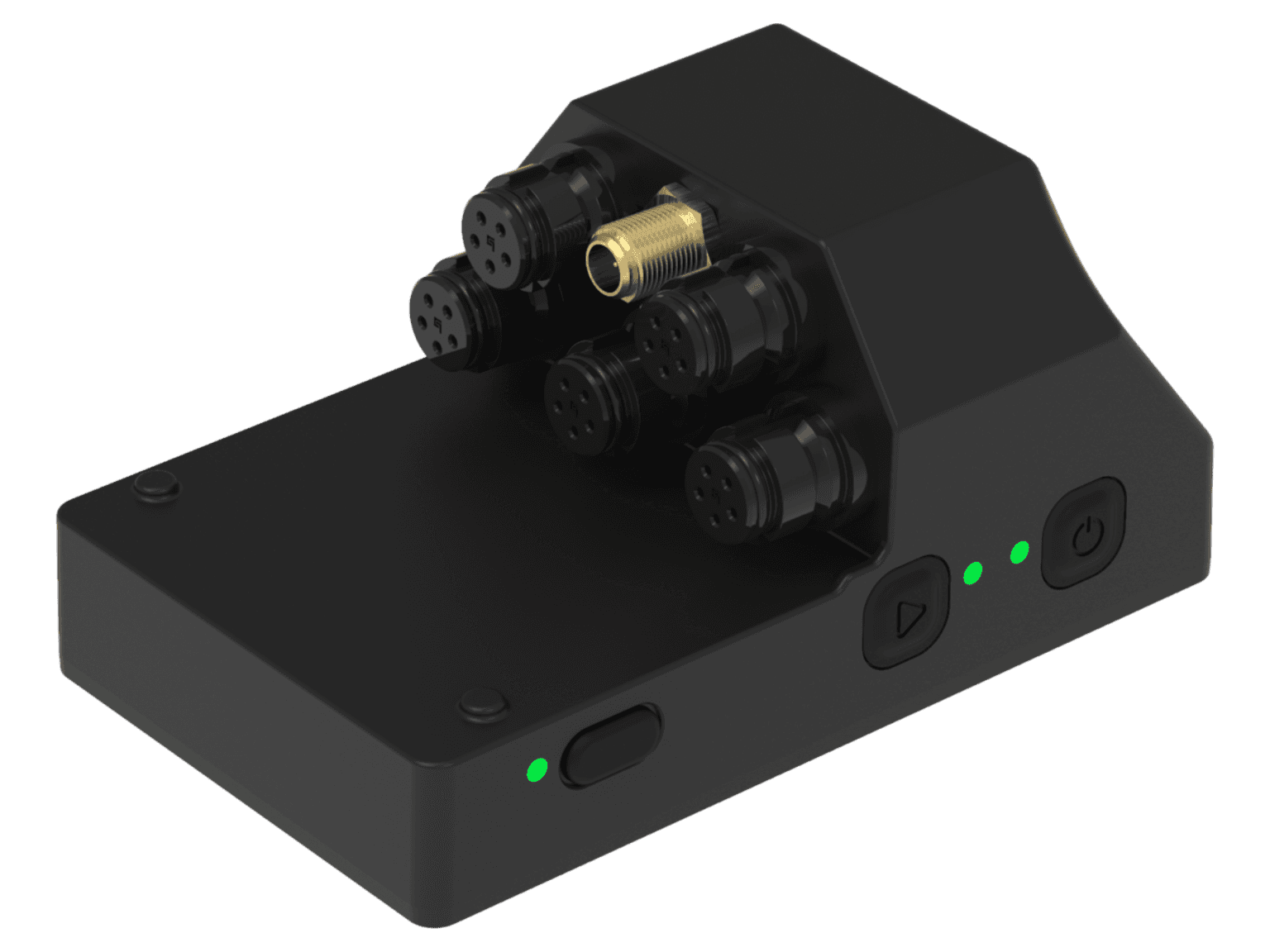
Telemetry V3 Pro
You set up other people's bikes, or you race.
Five connectors and the GPS antenna. Three spare once the suspension sensors are in, for brakes, pressure, remote accelerometers, a wired trigger to mark events along the track, or any other custom sensor.
- Telemetry V3 Pro
- 5 sensor connectors
- Telemetry V3 Pro
- 1000 Hz sampling
- Telemetry V3 Pro
- Brakes · pressure · accelerometers · trigger · custom
- MTB
- Moto
- Quad
- Car
- OPEN
The two units, side by side
| Specification | Telemetry V3 | Telemetry V3 Pro |
|---|---|---|
| Sensor connectors | 2 | 5 |
| Sampling rate | 500 Hz | 1000 Hz |
| What it can record | Suspension | Suspension, brakes, pressure, remote accelerometers at the axles, a wired trigger to mark the track, and custom sensors |
| Built-in IMU (3-axis ±16 g, 3-axis ±1000 °/s) | Yes | Yes |
| Vehicle modes | MTB, Moto | MTB, Moto, Quad, Car, plus OPEN (custom non-BYB sensors) |
| Software and app | Included, with limited features | Included, every feature |
| BLE sensors (heart rate, power, cadence) | No | Yes |
| Custom channel mapping | No | Yes |
| Raw data export | No | Yes |
| Auto pause | Yes | Yes |
| Continuous sampling | +9h | +9h |
| Weight | 80 g · 2.8 oz | 80 g · 2.8 oz |
| Dimensions (with connectors) | 40×50×80 mm · 1.6×2.0×3.1 in | 40×50×80 mm · 1.6×2.0×3.1 in |
What BYB Telemetry fits
Four vehicles, and one of the two tiers is not limited to a vehicle at all. Telemetry V3 records a mountain bike or a motorcycle; V3 Pro adds quad, car and OPEN mode.
Mountain bike
Downhill, enduro, cross-country and e-MTB. A 210 mm fork sensor and an 80 mm shock sensor as standard, and other combinations built on request.
Moto
Motocross, dirtbike, enduro, road and speedway. A 350 mm fork sensor and a 150 mm shock sensor cover motocross travel; anything shorter — a road bike, a speedway machine — takes sensor lengths built to the bike on request.
Quad and car
Telemetry V3 Pro only. Four corners, five analog channels, and the vehicle modes to match.
Anything else, on V3 Pro
OPEN mode maps the five analog channels to whatever you are measuring. General-purpose acquisition, not a vehicle preset.
The software that reads it
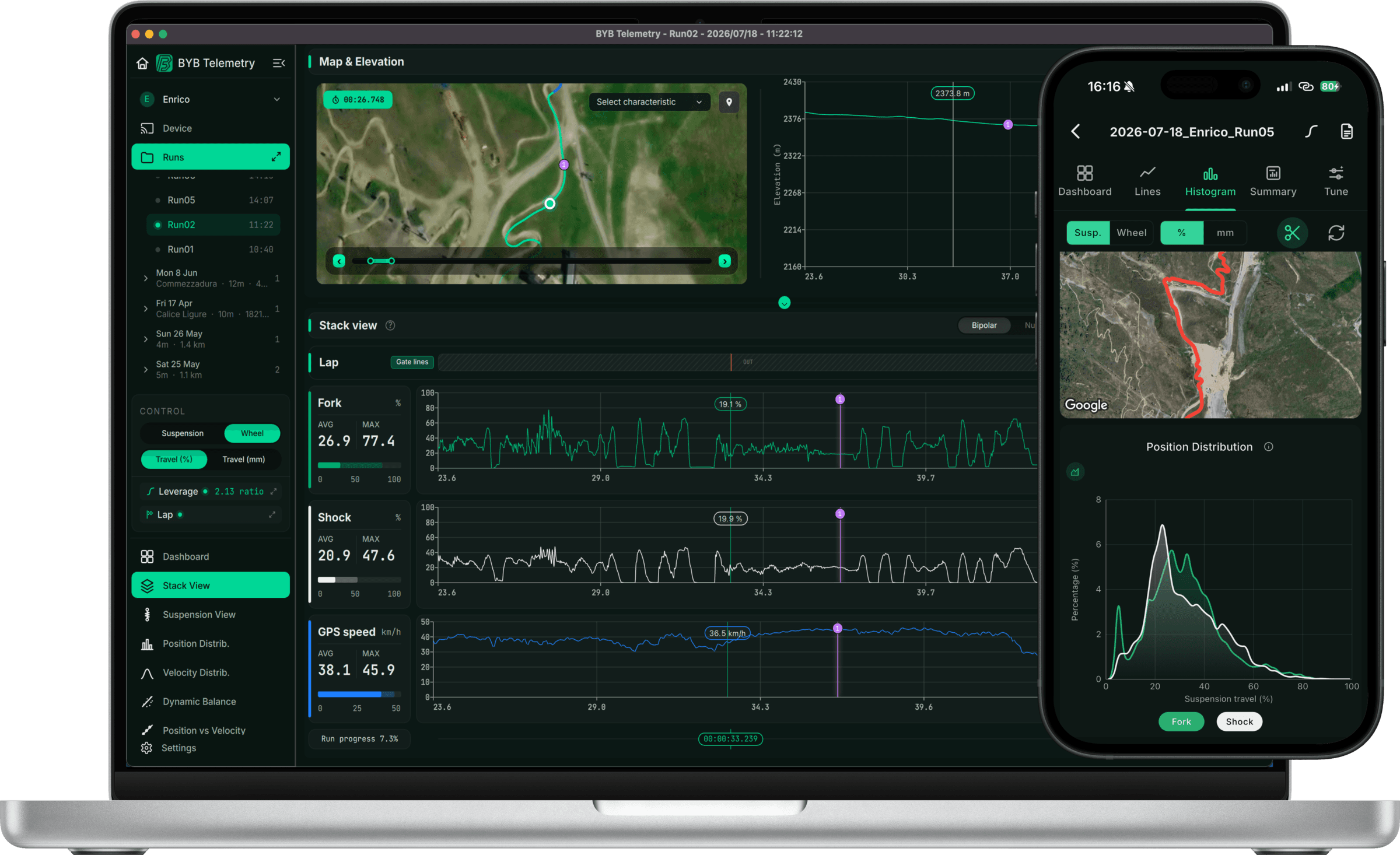
Analysis views on Mac and Windows, and an iOS and Android app for downloading and reviewing runs at the track. It takes no data background to use: the views are built, and auto tuning proposes the next change to make. You decide whether to make it.
Someone near you can set it up
BYB Points are workshops and suspension technicians trained on the system. There are +189 of them across +37 countries, and they will fit the hardware, record with you and read the result back.
You do not need one to own a Telemetry V3. You want one when you would rather not do the work yourself, and hand it to somebody who does it every week.
Covered in





- RideApart




























For workshops, teams and shops
A setup session that produces a before-and-after report is a service a workshop can charge for. One that produces an opinion is not.
The industry runs it too
Suspension manufacturers, component brands and vehicle makers already use the same system in their own development.






Sell the evidence, not the hour
A rider who can see what changed comes back, and tells other riders. The report is the product, and it names the next job: a service, a spring change, or a tune built for that rider.
A process a second technician can run
Record a baseline, change one setting, compare. Repeatable across staff, and teachable.
Every vehicle through one bench
Telemetry V3 Pro covers mountain bike, motocross, quad and car, plus OPEN mode for whatever comes through the door.
FAQ
Questions about suspension data acquisition
- What is suspension data acquisition, and why use it?
- Suspension data acquisition measures how a suspension actually moves, then turns that motion into charts you can compare run to run. It replaces “it felt better” with a difference you can point at.
- Do I need to be a data engineer to use it?
- No. The workflow is record a baseline, change one setting, compare the two runs. Auto tuning proposes where to go next, and BYB Tech runs an online course for riders and technicians who want the whole method quickly.
- How long does installation take?
- Typically under 15 minutes, and quicker once you have done it before. The mounts are universal and fit both air and spring suspension. They fit the majority of suspensions and frames.
- Do I have to calibrate the sensors?
- No. BYB Telemetry zeroes itself automatically while you ride, so there is no calibration routine to run before a session. Telemetry V3 Pro also lets you set a zero manually, if you want to fix the reference yourself.
- What is the difference between Telemetry V3 and V3 Pro?
- Telemetry V3 records 2 analog channels at 500 Hz and fits mountain bike and motocross. Telemetry V3 Pro records 5 customisable channels at 1000 Hz, adds quad, car and OPEN mode, and exports raw data. Both use the same sensors.
- Will it fit my bike?
- The mounts are universal and work with air and spring suspension across mountain bike and motocross. Sensor strokes differ by vehicle — 210 mm and 80 mm for a mountain bike, 350 mm and 150 mm for motocross. Sensor length can be customised on request.
- Do I need the brake and speed sensors?
- They are optional. Add brake sensors when you want to know exactly where a rider was braking, and a speed sensor to track wheel speed directly and catch the moments a wheel locks.
- Is this only for race teams and professionals?
- No. Telemetry V3 exists for riders who want a repeatable setup process. V3 Pro is the tier built for teams, technicians, racers and anyone who wants to go deep into a setup.
- Can I export the raw data?
- On Telemetry V3 Pro, yes. Raw export and custom channel mapping are two of the six differences between the tiers. OPEN mode carries the same raw export, whatever custom sensor is connected.
- What is in the box?
- Everything you need to start recording. See the whole lineup